Concrete Finishing in Poway & San Diego County
The Right Finish at the Right Time
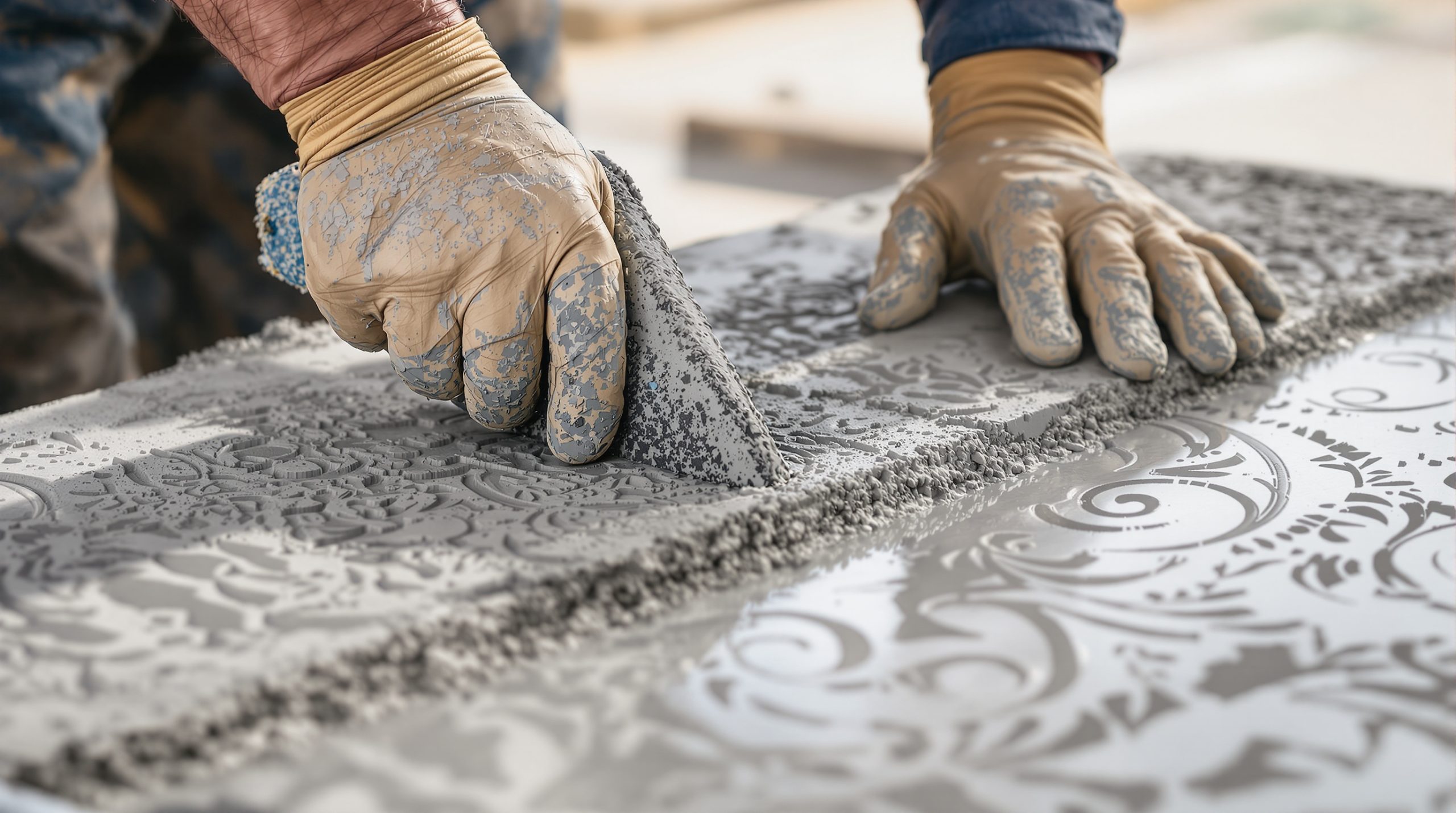
Broom, trowel, stamp, or exposed aggregate, the finish is what you live with for decades. BES knows the timing windows that separate a lasting surface from one that looks good for a season.
Get a Free Finishing Quote
Tell us about your project. We respond same day, usually faster.
Concrete Finishes BES Applies in San Diego County
Every pour ends with a finish decision. These four cover the range of what most homeowners in Poway and inland North County are asking for, from the workhorse broom finish to decorative stamped patterns. The finish is quoted alongside the pour, not as a separate conversation after the truck leaves.
Broom Finish
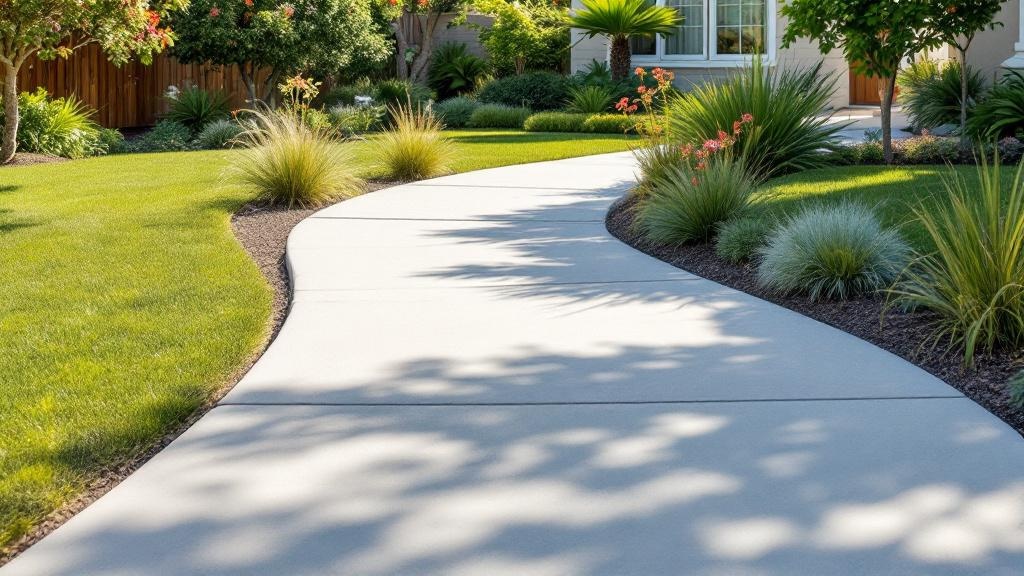
The standard for driveways, sidewalks, and any exterior surface that needs reliable grip. A stiff broom is dragged across the freshly floated surface to create a consistent linear texture. The depth of the broom stroke is adjusted based on the intended use, finer for walkways, coarser for heavy-traffic slabs.
Trowel Finish
A smooth, dense surface produced by steel-troweling in multiple passes as the concrete stiffens. Best for covered patios, garage floors, and interior slabs where texture is not needed for grip. In San Diego's outdoor conditions, smooth-trowel finishes are typically limited to covered areas, an untextured outdoor surface becomes slippery when wet.
Stamped Concrete Finishes
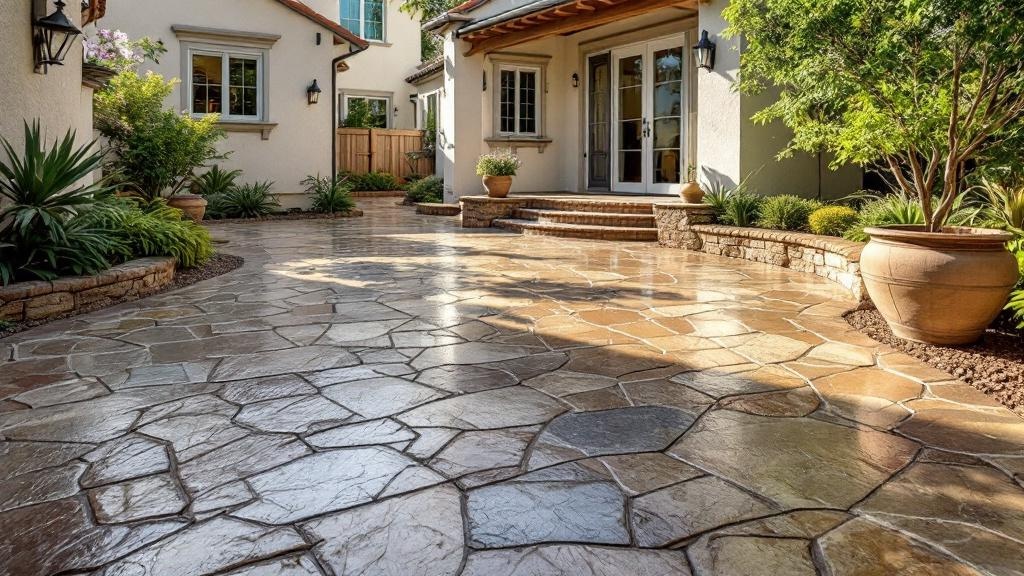
Pattern mats pressed into the concrete surface while it is in the plastic (workable) stage. Common patterns include slate, cobblestone, brick, and flagstone. Integral color goes into the mix before the pour; release agents add contrast at the stamp. The stamping window is narrow, too early and the mats sink, too late and the pattern will not transfer. See our dedicated Stamped Concrete page for project scope.
Exposed Aggregate
The surface cream is washed away after the concrete sets to reveal the aggregate (stone or pebble) beneath. The texture is non-slip and durable, and the appearance depends on the specific aggregate in the mix. This finish is specified before the pour because the aggregate selection is part of the mix design, not an afterthought.
What Actually Happens After the Concrete Goes Down
Most homeowners see the truck, the pour, and the finished surface. What happens in between, and when it happens, is what determines how long that surface lasts.
The Pour & Screed
Concrete goes down from the truck, and the crew spreads and screeds it to grade using a screed board or vibrating screed. Screeding removes excess concrete and establishes the flat plane the finish will be applied to. Air pockets are driven out with a vibrator for structural pours. By the end of this step, the surface is rough and level but not finished.
The Bull-Float Pass
A bull float, a wide, long-handled tool, is pushed across the fresh surface to knock down ridges left by screeding and bring a thin layer of paste (cement and fine sand) to the top. This paste layer is what the finish tools work with. On most residential projects, a darby or hand float follows for areas the bull float cannot reach.
Waiting for the Bleed Water
After floating, water bleeds to the surface as the heavier aggregates settle. Finishing too early, before the bleed water has evaporated, traps moisture in the surface layer, weakening it and causing dusting or delamination later. This waiting period is where San Diego's heat and wind become variables: on a hot, dry day in Poway in July, this window closes fast. Working too slow means the concrete has already stiffened and will not take a proper finish.
The Finish Pass
Once bleed water is gone and the surface has the right resistance underfoot, a slight give but not soft, the finish pass happens. For broom finish: a mag float to tighten the surface, then a stiff broom drawn in a single direction. For trowel finish: multiple steel-trowel passes in different directions, each one on stiffer concrete than the last. For stamped concrete: the stamp mats go down and are pressed in during this same window. The entire crew needs to work in sync, one person behind the other, so the finish is consistent across the slab.
What Goes Into a Properly Finished Concrete Surface
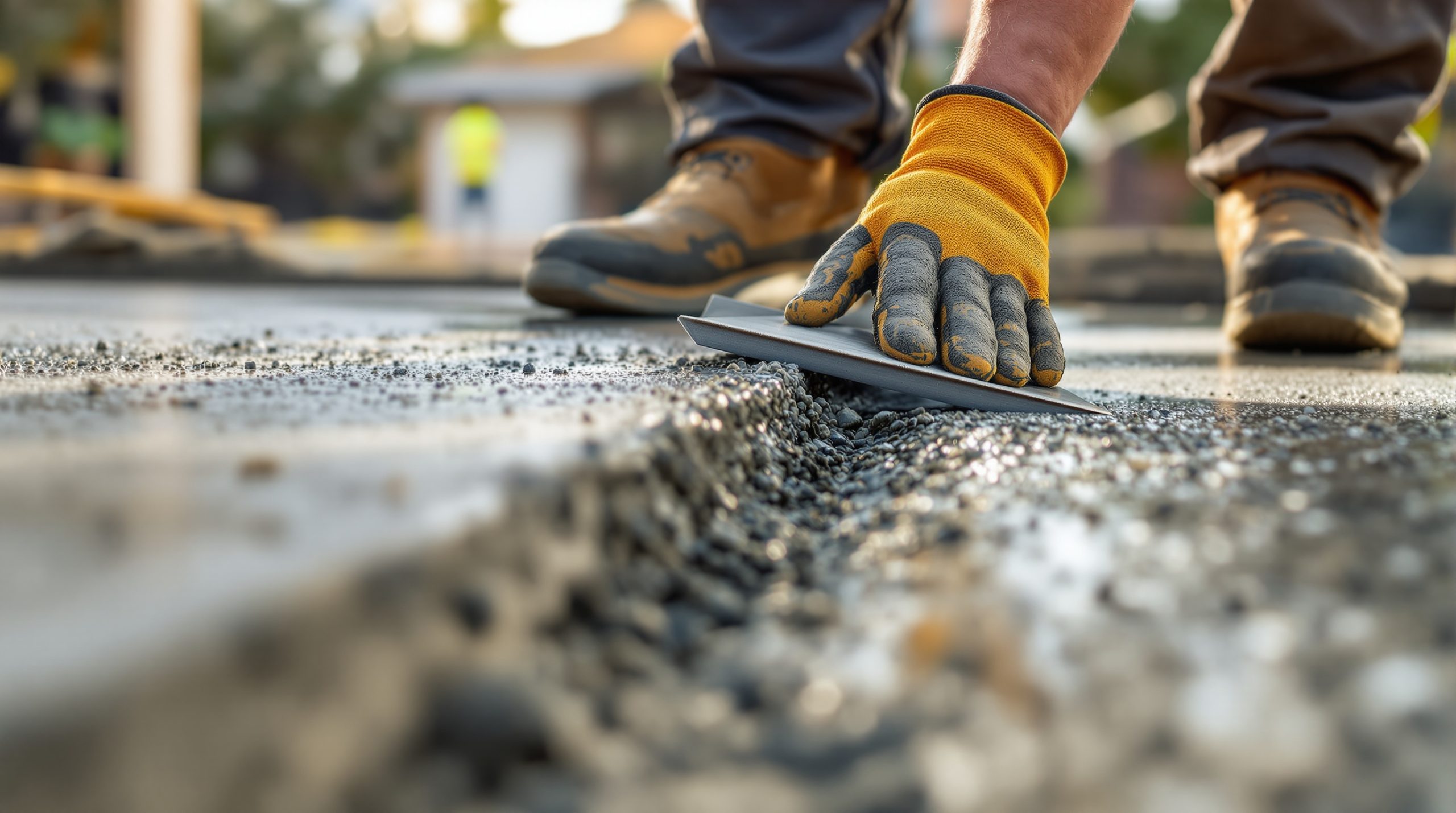
Concrete finishing is not a single tool or a single moment. It is a sequence of tools used in a specific order on concrete at the right stage of set. In San Diego County's warm climate, that sequence moves faster than it does in most of the country. The tools below are what BES uses on a standard residential finishing job:
- Mix designThe mix affects workability and the finish window. A wetter mix is easier to place but extends the bleed-water wait and produces a weaker surface layer. BES specifies the right slump for the job, we do not add water at the truck to make placement easier.
- Bull floatUsed after screeding to flatten and consolidate the surface layer. Magnesium floats for open texture; steel floats for smoother base prep before troweling.
- Finishing broomHorse-hair or synthetic bristle depending on desired texture depth. Drawn across the surface in one pass per area. BES uses a consistent bristle type throughout a project so texture is uniform.
- Steel trowelMultiple passes on hardening concrete for trowel finish. Each pass is on concrete stiffer than the last. Power trowels (ride-on or walk-behind) used on larger flat areas like garage floors.
- Stamp matsPattern mats in various textures. Antique release is broadcast over the surface before stamping to prevent the mat from bonding and to add color contrast. Mat selection is confirmed before the pour.
- Integral color & hardenerFor colored concrete, pigment is mixed into the batch at the ready-mix plant. Dry shake hardeners can be broadcast onto the surface just before finishing to increase density and abrasion resistance in high-traffic areas.
- Curing compoundApplied immediately after finishing to slow moisture evaporation and allow proper hydration. Skipping curing is one of the most common causes of surface crazing and dusting, especially in San Diego's dry heat.
What Homeowners Usually Ask Before Choosing a Finish
Finish type affects cost, maintenance, and how the surface performs over time. Here is the honest version of the tradeoffs.
Which finish should I choose?
For outdoor flatwork that gets rained on, driveways, sidewalks, uncovered patios, broom finish is the practical default. Trowel finish is appropriate for covered patios, garage interiors, and any area that will not get wet. Stamped concrete is a legitimate decorative option for patios and pool decks where appearance matters more than the lowest cost. Exposed aggregate is a durable, non-slip option that requires no sealing to maintain its look. BES walks through all options and their price differences at the quote visit.
Does finish affect how long the concrete lasts?
Yes, meaningfully. A properly timed and applied finish produces a denser surface layer that resists staining, weathering, and abrasion better than a surface that was finished too early or too aggressively. San Diego's UV exposure and temperature swings between summer and winter also accelerate surface degradation on concrete that was finished or cured incorrectly.
Can I change my finish later?
Not fully. You can resurface old concrete with a thin overlay and apply a new texture or stamp pattern on top, that is a different service (see our Concrete Resurfacing page). But the base concrete's structural properties are set at the pour. If the original finish was done poorly, resurfacing can fix the appearance but not the underlying surface weakness.
How does heat affect finishing in San Diego?
San Diego's inland areas, Poway, Rancho Bernardo, Escondido, can see temperatures above 95 degrees on summer pour days. Hot weather accelerates hydration and shortens the finish window significantly. BES schedules pours for early morning in hot weather, and we adjust the mix design to buy more working time when needed. We do not pour concrete in conditions where we cannot finish it properly.
What does a decorative finish cost vs. plain concrete?
A standard broom-finish driveway runs roughly $8 to $15 per square foot in San Diego County. Stamped or decorative finishes typically add $6 to $10 per square foot on top of that. The premium covers the additional labor (stamping is time-sensitive and crew-intensive), the cost of pigments and release agents, and any sealing required for the decorative surface. These are estimates, BES prices the specific finish options on the written quote.
How do I maintain a decorative concrete finish?
Exposed aggregate and broom finish surfaces need minimal maintenance: occasional cleaning and a resealing every 3 to 5 years for decorative work. Stamped concrete should be resealed more frequently if it is in full sun, the sealer protects the color from UV fade and the surface from water penetration. For all concrete, avoid deicing salts (not a common concern in San Diego, but worth noting for anyone who parks a car from a snowy region).
A Crew That Respects the Timing
Finishing concrete is one of those skills that looks simple until it goes wrong. A crew that rushes the broom pass over wet bleed water, or stamps when the concrete is already too stiff, produces a surface that fails within a few years. BES has been finishing concrete in San Diego County since 2016. We know how the heat and wind in Poway affect the finish window, and we plan accordingly.
- Finish type and cost quoted together, no surprises after the pour
- We wait for bleed water to clear before any finish pass, every time
- San Diego heat accounted for in pour scheduling and mix design
- Curing compound applied immediately after finishing, no shortcuts
- Licensed (CSLB #1026938), insured, and BBB accredited since 2016
- Raymond and the crew who quote you are the ones finishing your concrete
Concrete Finishing Projects in Poway & San Diego County
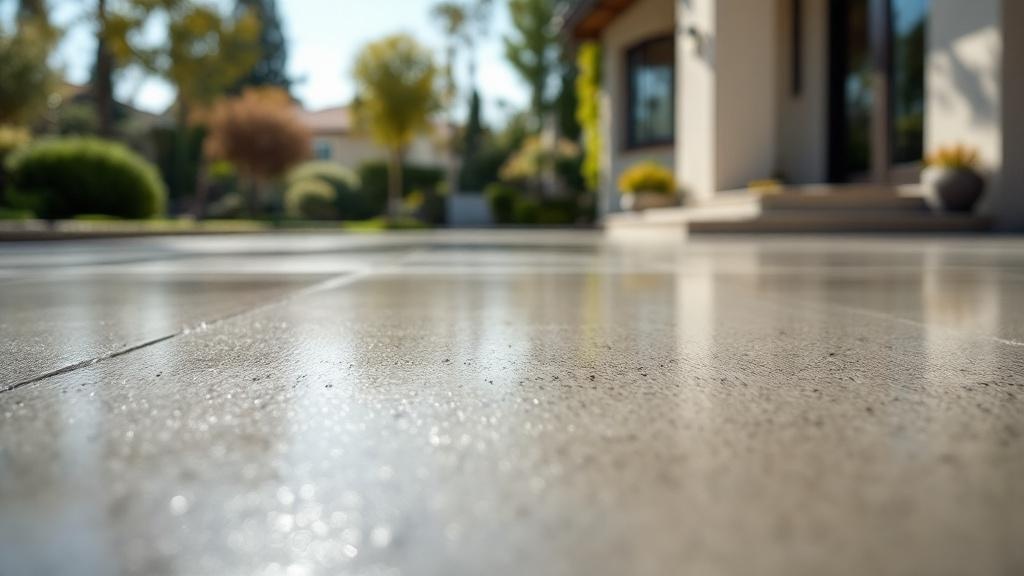
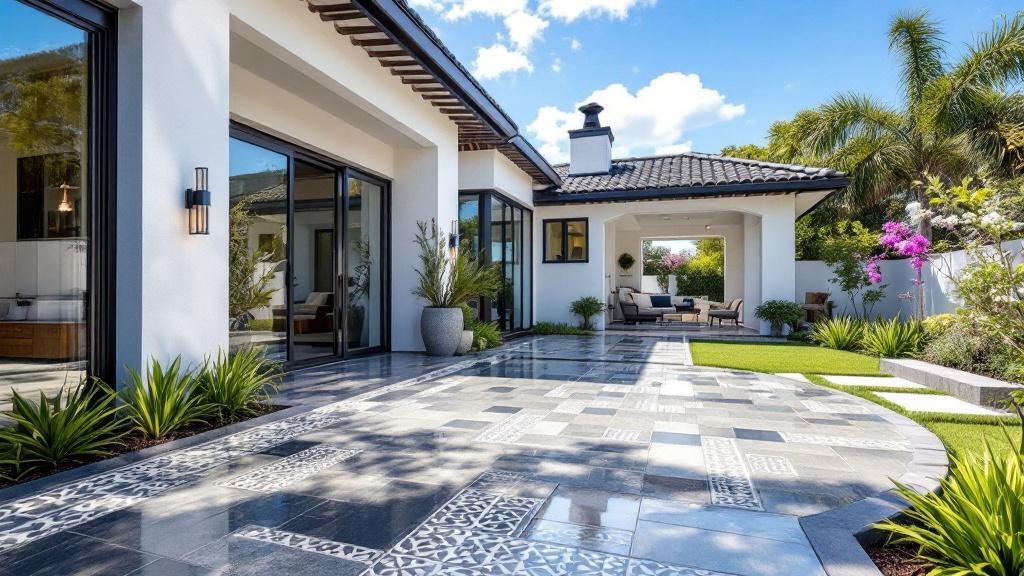
Examples of broom finish, stamped, and decorative concrete work across inland North County.
Questions About Finish Types & Quality
What is the most common concrete finish for driveways in Poway?
How does stamped concrete finishing work?
Can I get a smooth finish on an outdoor driveway or patio?
What is exposed aggregate concrete?
How does San Diego's weather affect concrete finishing?
How long does a concrete finish last?
Can old concrete be refinished?
Related Concrete Services
Finishing is part of every concrete pour. Here are the project types where BES applies these techniques, each quoted with finish options on the same written estimate.
Let's Talk About Your Concrete Project
Free on-site quote with all finish options and pricing laid out clearly. No pressure, no obligation, just an honest look at what your project needs.
Licensed & insured (CSLB #1026938) · BBB accredited #1087327 · Serving all of San Diego County from Poway