Concrete Cutting in Poway & San Diego County
Control Joints, Utility Trenching & Slab Prep
Saw-cutting control joints on every new pour. Utility trenching and joint retrofitting on existing slabs. The right cut with the right equipment, done by the crew that poured it in the first place.
Get a Free Cutting Quote
Tell us about your project. We respond same day, usually faster.
Concrete Cutting Services for Poway & San Diego County
Control joint cutting is part of every BES new pour. For existing slabs, we offer saw-cutting for utility access, joint retrofitting, and removal prep. Honest about scope: some cutting needs pair naturally with repair or replacement work.
Control Joint Cutting
Standard on every BES new pour. Control joints are saw-cut at 8 to 10 foot intervals to direct normal concrete movement to the joint rather than across the slab surface. Cut within 24 hours of pour on most mixes.
Utility Trenching & Access Cuts
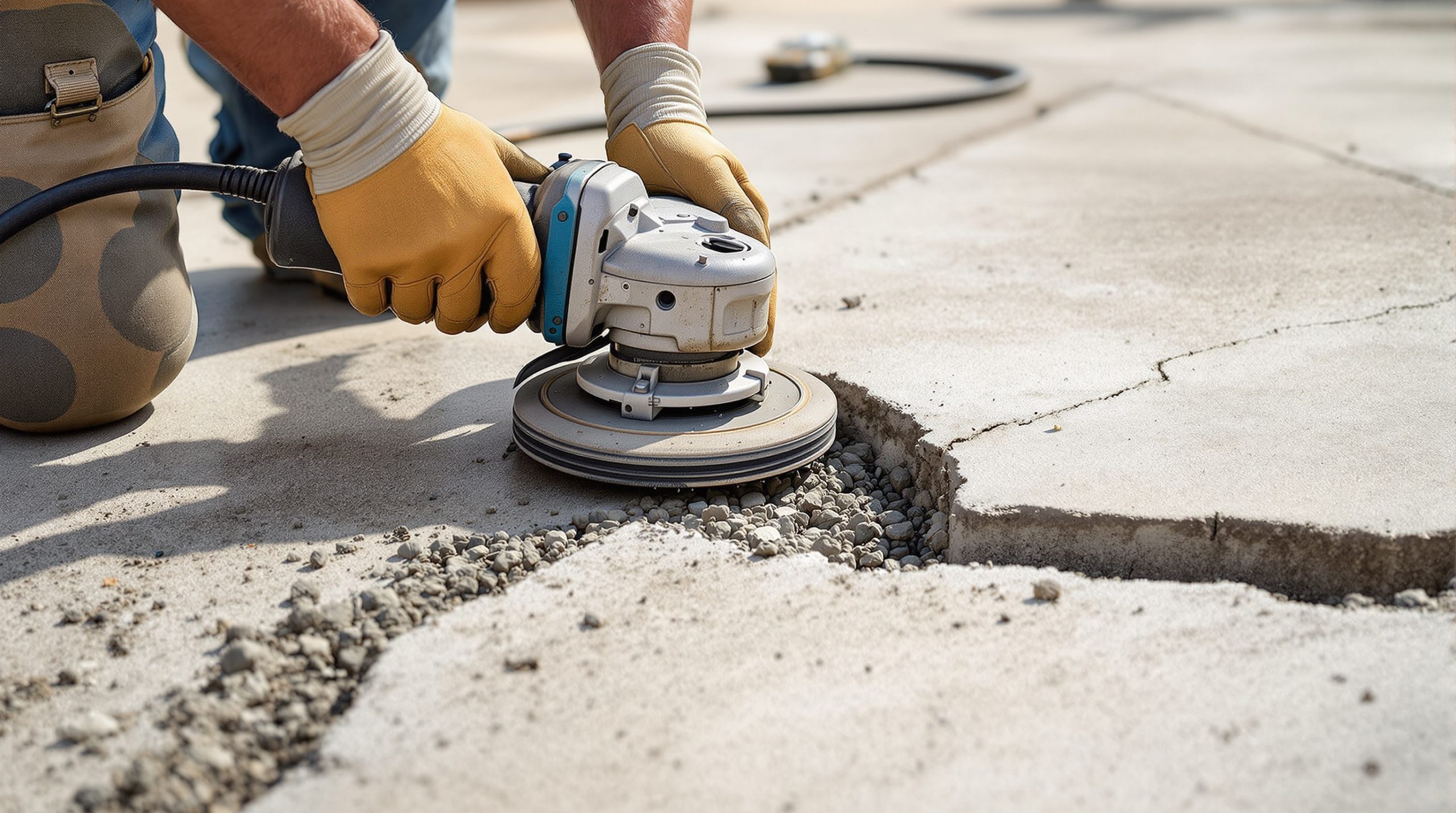
Cutting through existing concrete to access plumbing, irrigation lines, conduit, or drainage below. We cut to the dimension the plumber or electrician needs, with clean vertical walls so the repair or backfill sits properly.
Expansion Joint Retrofitting
Existing slabs that were poured without adequate joints often crack across the face instead of at a controlled location. Saw-cutting and filling new expansion joints into an existing slab can stop progressive cracking from spreading, most effective when done early before structural damage develops.
Slab Prep Cuts for Removal
When a section of a larger slab is being removed, for a repair, an addition, or a partial replacement, clean saw cuts at the removal boundary make the break-out cleaner and protect the adjacent concrete from collateral damage during demolition.
What Goes Into a Proper Concrete Cut
The right blade, wet suppression, the right depth, and a clean hand-off to the next trade.
Assessment & Layout
For new pours, control joint layout is planned at the quote stage based on slab dimensions and thickness. For existing slabs, we assess the concrete condition, approximate thickness, and what may be below (irrigation, conduit, radiant heat) before committing to a cut depth. We confirm the plan before any cutting starts.
Wet-Cut Setup
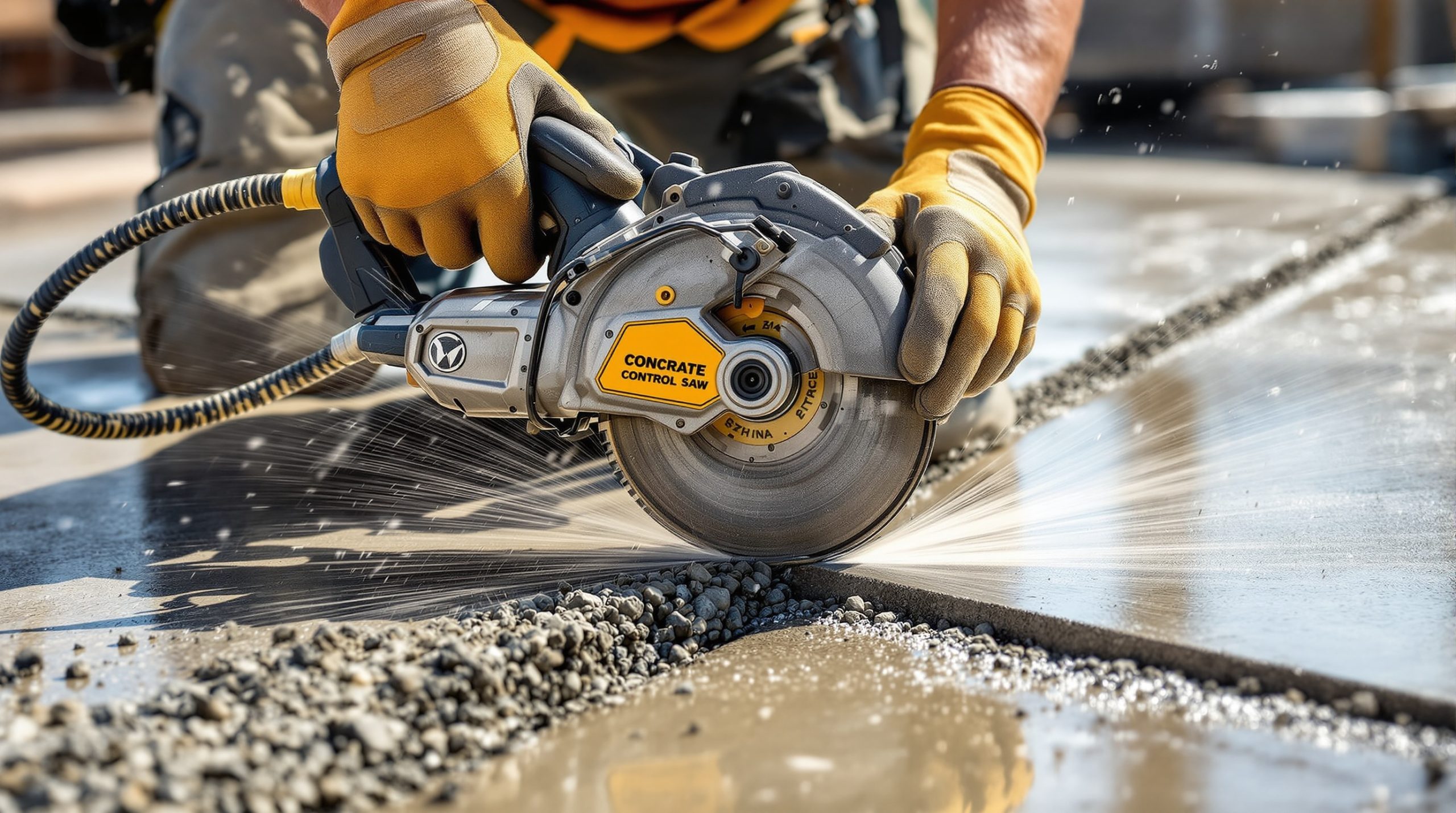
All saw-cutting is done wet. A water feed runs directly to the blade during cutting, which suppresses the concrete dust and the crystalline silica it carries. Silica dust from dry concrete cutting is a serious respiratory hazard, wet cutting is not optional on any occupied site. We set up containment to manage the slurry that results from wet cutting.
Diamond Blade Saw Cutting
We use diamond blade saws sized to the job, the blade spec depends on the aggregate hardness and slab thickness. Control joints are typically cut to one-quarter the slab depth (for a 4-inch slab, that means a 1-inch cut depth), which is enough to create a weak plane that directs movement. Utility trenches and access cuts go deeper, to just above whatever is below, confirmed with the relevant trade before we cut.
Clean Out & Hand-Off
After cutting, we clear the slurry and concrete dust from the cut path. Depending on the purpose of the cut: control joints may be left open, filled with backer rod and polyurethane sealant, or handed off for the next step in a larger project. Utility trenches are left open for the plumber or electrician, with the cut edges clean and vertical. We confirm the hand-off protocol before starting.
Why the Equipment and Method Matter for Concrete Cutting
Concrete cutting is simple in concept and specific in execution. The wrong blade for the aggregate hardness wastes time and costs money. Dry cutting on an occupied site creates a silica dust exposure risk that regulations do not allow and common sense should prevent. Here is what BES uses and why:
- Diamond blade sawBlade type is matched to the concrete's aggregate hardness. Harder aggregate requires a softer bond matrix in the blade to prevent glazing. Using the wrong blade on hard aggregate results in slow cutting and excessive blade wear, a cost the contractor absorbs, not the homeowner.
- Wet-cut water supplyWater runs to the blade throughout the cut. OSHA requires wet cutting or equivalent silica controls on any occupied residential job site. Dry cutting without dust suppression is not something BES does, regardless of the size of the job.
- Slurry containmentWet cutting produces a concrete and water slurry. We contain it and dispose of it properly rather than letting it run across adjacent surfaces, into storm drains, or onto the neighbors' property. Concrete slurry is a pH-hazard to landscapes and prohibited from storm drainage in San Diego County.
- Joint sealant (if applicable)For expansion joint retrofitting, the cut is cleaned out, a foam backer rod is set to the correct depth, and a polyurethane joint sealant is applied on top. The sealant is flexible, which allows the joint to open and close with normal concrete movement without cracking the sealant.
- Backer rod (if applicable)Foam backer rod is placed in the joint before sealant application to control the sealant depth. The sealant should be no deeper than it is wide for proper movement performance. Skipping the backer rod results in too-deep sealant that can\'t flex properly.
Straight Answers on What Concrete Cutting Can and Cannot Fix
When cutting helps, when it does not, what it costs, and what happens to the concrete dust. No overselling.
Is concrete cutting a standalone service?
Honestly, it depends. BES includes control joint cutting on every new pour as a standard part of the project. For existing slabs, saw-cutting for utility access or removal prep is available as a standalone service, though it is more often part of a repair, resurfacing, or replacement scope. If all you need is a utility trench cut through a driveway for an irrigation line, we can quote that. Call Raymond and describe what you are trying to accomplish.
What does concrete cutting cost?
For standalone utility trench cuts or expansion joint retrofitting, pricing depends on linear footage, slab thickness, and what is involved in mobilizing for a single-trade visit. There is a practical minimum for any job that requires equipment, crew, and wet-cut setup, very small jobs (one or two cuts) may not be economical as standalone work. BES is honest about this at the quote stage. If the cutting is part of a larger repair or replacement project, it is included in that scope.
What is the concrete dust situation?
Concrete dust contains crystalline silica, which is a serious respiratory hazard with repeated exposure. All BES concrete cutting is done wet, water runs directly to the diamond blade throughout the cut, suppressing dust at the source. We contain the resulting slurry rather than letting it run freely. If a contractor quotes you concrete cutting without mentioning dust suppression, ask them specifically whether they cut wet or dry.
Can cutting fix a cracked slab?
Saw-cutting retrofit expansion joints can stop progressive cracking from spreading further in a slab that cracked because it had no joints. It is most effective early, before cracks extend into structural breaks or the edges begin to spall and separate. If cracking has already caused settling, heaving, or structural separation, cutting joints is not the right fix, repair or replacement is. Raymond will tell you honestly which situation you have.
Do I need a permit for saw-cutting?
Cutting through an existing slab for utility access typically does not require a standalone permit, but the utility work being done below usually does. The permit for the plumbing, irrigation, or electrical work covers the trench. BES confirms the specific situation at the quote visit.
What if there is irrigation or conduit below the slab?
This is the most important pre-cut question. For any existing slab, we ask about what may be below before confirming a cut depth. Irrigation lines in residential driveways and patios are common in San Diego County. If you have as-built drawings or know where the lines run, have that information ready. If not, the plumber or electrician being served by the trench usually knows where their own lines are. We cut to safe depth rather than jamming the blade through whatever is down there.

The Crew That Poured It Knows How to Cut It
On BES projects, concrete cutting is part of the pour-day plan, not an afterthought. For existing slabs, Raymond assesses what is below before committing to a cut depth. Family-run out of Poway since 2016, same crew, same number, no dispatchers.
- Control joint cutting planned at quote stage on every new pour, not forgotten
- All cutting done wet, silica dust control is not optional on any BES job
- Below-slab utility assessment before any cut on an existing slab
- Licensed (CSLB #1026938), insured, and BBB accredited since 2016
- Honest about when cutting alone is not the right solution
- One number, Raymond answers it, not a dispatch system routing you to an unknown crew
Concrete Projects in Poway & San Diego County
Concrete work we have completed for homeowners across inland North County.

Questions Homeowners Ask About Concrete Cutting
When are control joints cut on a new concrete pour?
How deep are control joints cut?
Can saw-cutting fix cracks in an existing concrete slab?
What creates the dust from concrete cutting, and how dangerous is it?
Do I need a permit for saw-cutting through my driveway or patio?
Can BES cut through concrete that has radiant heat or irrigation lines below it?
Is concrete cutting available as a standalone service from BES?
Related Concrete Services
Concrete cutting often pairs with repair, resurfacing, or demo work on the same project. Same crew, same written-quote standard.
Tell Us What You Need Cut
Whether it is a new pour that needs control joints, a utility trench through an existing driveway, or a slab you are trying to retrofit joints into, free on-site assessment, written scope before any work starts.
Licensed & insured (CSLB #1026938) · BBB accredited #1087327 · Serving all of San Diego County from Poway