Concrete Steps in Poway & San Diego County
Code-Compliant, Non-Slip, Properly Anchored
Rise and run built to IRC residential code. Broom finish on every tread. Integrated with your existing porch landing or walkway. Written quote, firm price from the crew that pours them.
Get a Free Steps Quote
Tell us about your project. We respond same day, usually faster.
Concrete Step Services for San Diego County Homes
From a simple 3-step front entry to a full grade-transition stair with a landing, BES handles the measurement, forming, pour, and finish. One crew, one quote, one price.
New Entry Steps
No steps exist yet, or you are building a new entry from the ground up. We measure rise and run to code, excavate the footing, form, reinforce, and pour. Everything from bare ground to a finished step set.
Step Replacement
Existing steps that are spalling, crumbling, cracked through, or have settled to the point of creating a trip hazard. We break out the old structure, prep the base, and pour a clean replacement. Demo and hauling are in the quote.
Steps + Landing Integration
Tying a new step set into an existing porch landing, front entry slab, or walkway. We key the new pour into the adjacent concrete with a proper construction joint and match the tread finish as closely as possible.
Grade Transition Steps
Side-yard and backyard grade changes often need a few steps to move between levels safely. We assess the grade, plan the step count to code, and pour in the appropriate finish for exterior non-pedestrian traffic conditions.
What Goes Into a Properly Built Concrete Step Set
Four steps on our end so the steps on your end are built right from the start.
On-Site Measure & Written Quote
We come to the property, measure the height change and available run, and plan the step count to IRC residential code, rise between 4 and 7.75 inches, tread depth 10 inches minimum. If handrail anchors will be needed (required at 4 or more risers in California), we note that in the scope. You get a written quote with the step configuration before we leave.
Demo & Footing Prep
If old steps are coming out, we break them down and haul the debris. The bottom footing is excavated below the existing grade and compacted properly, even a modest 3-step entry needs a solid base so the bottom step does not creep away from the structure over time. San Diego County clay soils expand and contract enough to shift a poorly anchored step set.
Form, Reinforce & Pour
We set forms for each tread and riser, install #3 rebar throughout the step structure, and pour the concrete in one continuous pour where the configuration allows. Nosing is tooled to a defined radius as the concrete stiffens, this gives the tread edge definition and reduces chipping. If handrail anchor sleeves are in scope, they go in before the pour sets.
Broom Finish, Cure & Walkthrough
Treads get a broom finish dragged across the face before the concrete sets, the texture is what keeps steps from being a slip hazard. Concrete needs 7 days before foot traffic; we let you know exactly when before we start so you can plan your entry access. We walk the finished steps with you before we pack up.
Why Step Construction Is Different from Flatwork
A concrete step takes concentrated point loads, foot-strike impact, and edge wear that a flat driveway slab does not. The mix strength, reinforcement placement, and nosing detail all matter more in a step than in flat concrete, and the base under the bottom footing matters just as much as the structure above it. Here is what BES specifies:
- Concrete mix3,500 to 4,000 PSI. Steps take more concentrated point loads than flatwork slabs, and the nosing edge sees a lot of wear. The higher-strength mix reduces edge chipping over time.
- Reinforcement#3 rebar throughout the step structure, including a horizontal bar running the length of each tread. Steps without rebar tend to develop stair-crack patterns at the riser-tread junction, especially when the base shifts.
- Aggregate baseCompacted gravel or road base below the bottom footing. San Diego County inland soils are expansive clay; a step set that sits on uncompacted or unstabilized native soil will shift. We compact to a solid base before forming.
- Nosing detailTread edges are tooled to a defined 1-inch radius as the concrete sets. A proper nosing provides visual definition, reduces raw-edge chipping over time, and meets the requirement that stair nosings not project more than 1.25 inches beyond the face of the riser.
- Broom finishStandard non-slip texture on all tread faces, applied while the concrete is still workable. The texture depth is what code and common sense require for exterior steps exposed to dew and rain.
- Handrail anchorsIf the step count triggers California\'s handrail requirement (4 or more risers), we set threaded anchor sleeves in the concrete during the pour. The ironwork or prefabricated rail gets attached to those anchors by a metal fabricator, a separate trade BES can refer you to if needed. [VERIFY anchor sleeve type with Raymond]
Honest Answers Before You Pick Up the Phone
Cost, permits, cure time, handrail requirements, and when repair is enough vs. when you need a full replacement. Plain answers.
What will new concrete steps cost?
A rough range for residential concrete steps in San Diego County is $150 to $350 per step for a standard poured-in-place configuration, depending on size, complexity, and finish. A 4-step front entry in plain broom finish typically lands between $800 and $1,800 all-in. Step replacement projects that include demo and haul-off run on the higher end of that range. These are estimates only, actual pricing depends on the specific site, step count, any landing integration, and finish. We give you a firm written number after seeing the project.
Do I need a permit for new steps?
Generally yes for new exterior steps or for replacing steps attached to a structure in Poway and the surrounding San Diego County communities. The specific permit requirement depends on whether the steps are attached to the home foundation or freestanding. BES confirms what is required at your address during the site visit and handles the permit application as part of the project scope.
When can we use them after the pour?
Seven days minimum before foot traffic. We tell you the exact date before we start so you can plan your front entry access accordingly. Do not use the steps sooner, concrete that has not cured to sufficient hardness will take surface impressions from shoe heels and can develop surface spalling. At 28 days, the concrete has reached full design strength.
When is a handrail required?
California Residential Code requires a graspable handrail when there are 4 or more risers on a stair. If your new step count hits that threshold, BES sets anchor sleeves in the concrete during the pour so a metal fabricator can attach the rail. The handrail itself is typically ironwork or prefabricated metal, not a concrete trade, but we can refer you to someone local. This is something we confirm and plan for during the quote visit, not a surprise at the end of the job.
Can you match my existing concrete?
We match the finish type and can approximate color, but a new pour will never be a perfect visual match to weathered 10- or 20-year-old concrete. That is true regardless of who does the work, concrete ages and weathers. For most front entry step replacements, the slight color difference at the joint reads as a clean, fresh repair rather than a mismatch. If color consistency matters to you, we talk through the options, including integral pigment, at the quote visit.
Repair vs. full replacement?
Surface spalling, where the top layer of concrete has delaminated or worn down but the structure below is sound, can sometimes be addressed with resurfacing or patching. Steps that are cracked through the structure, have settled away from the porch, or have riser-tread separations are typically beyond what patching fixes reliably. Raymond will tell you honestly which category your steps fall into at the site visit. If patching is the right answer for your situation, that is what we recommend.
A Poway Crew That Builds to Code and Stands Behind It
BES has been doing concrete work out of Poway since 2016. Raymond and the crew that quotes your steps are the same people who form and pour them. No call centers, no mystery subcontractors.
- Rise and run measured and formed to current California Residential Code
- Broom finish on every tread, non-slip is standard, not an upgrade
- Handrail anchor sleeves set during the pour when the step count requires it
- Licensed (CSLB #1026938), insured, and BBB accredited since 2016
- Written quote that covers demo, forming, pour, finish, and cleanup
- We walk the finished steps with you before we leave the job site
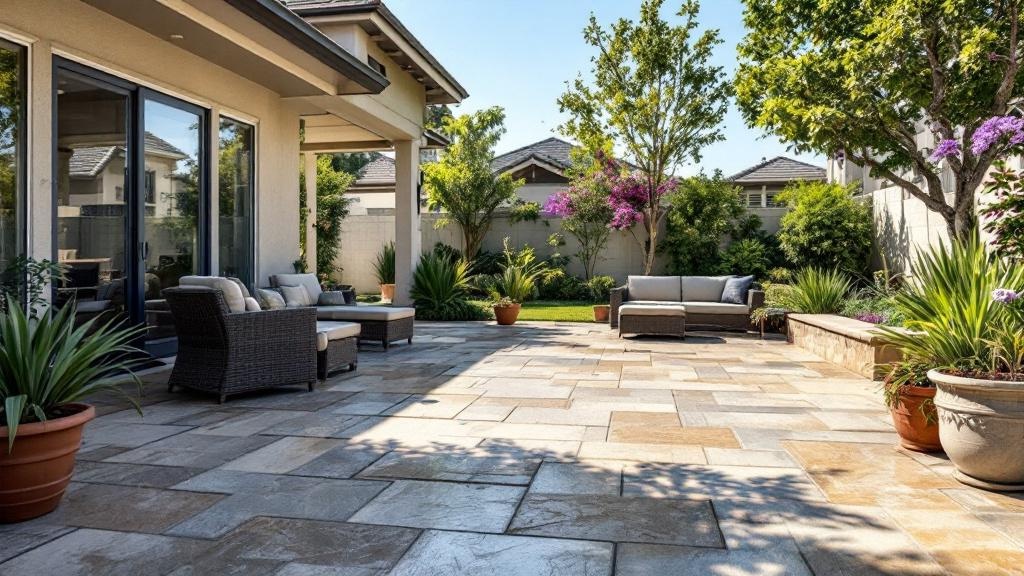
Concrete Step & Walkway Projects in Poway & San Diego County
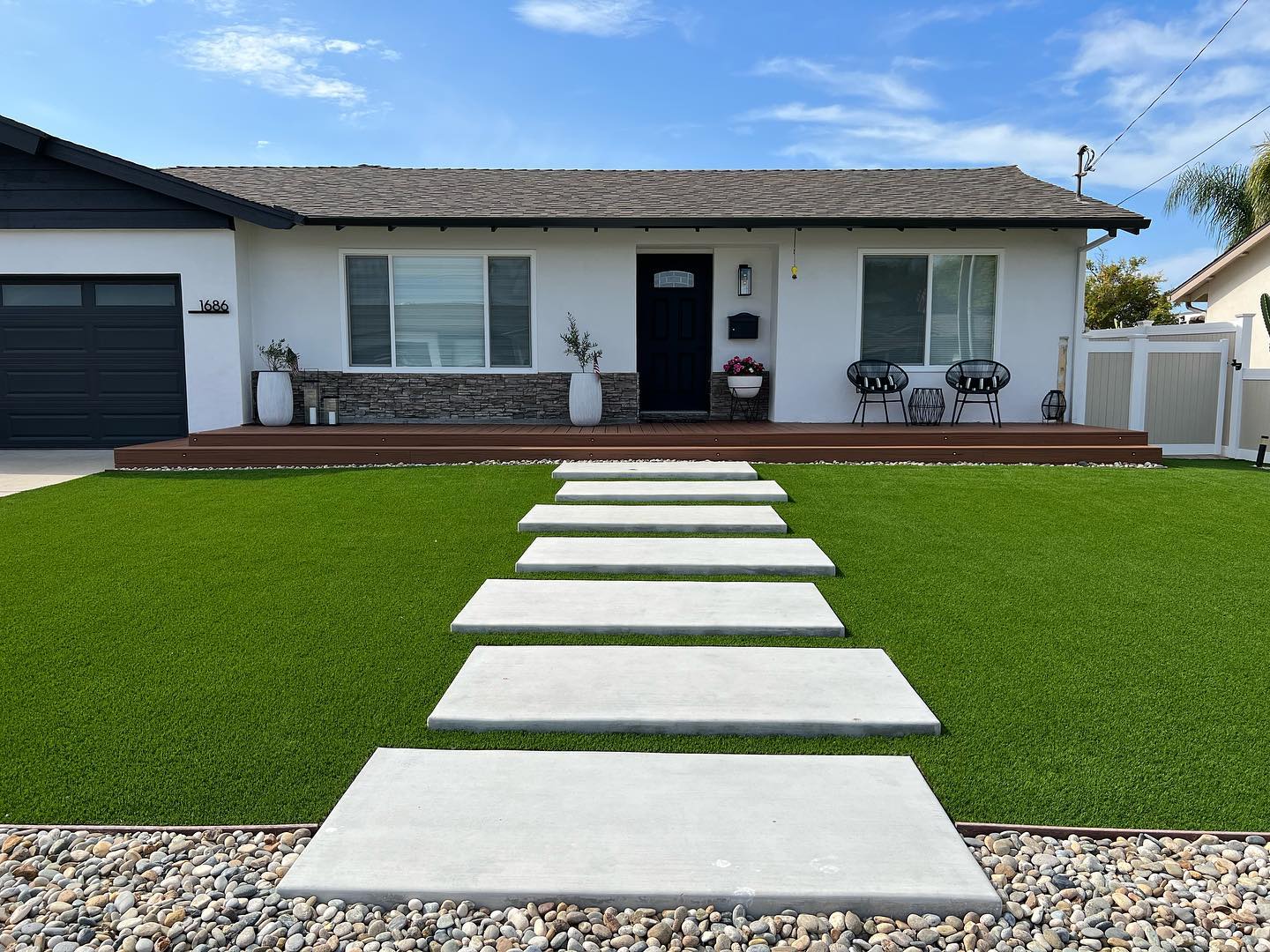
Finished step projects we have poured for homeowners across inland North County.
Questions Poway Homeowners Ask Before Calling
How much do concrete steps cost in Poway?
Do concrete steps in Poway require a building permit?
What are the residential code requirements for step rise and run?
At what point is a handrail required on exterior steps?
How long do we have to stay off new concrete steps?
What finish prevents slipping on concrete steps?
Can you build concrete steps that connect to my existing walkway or driveway?
Related Concrete Services
Entry steps often pair with a new front walkway, patio extension, or repair work elsewhere on the property. Same crew, same written-quote standard.
Let's Look at Your Step Project
Free on-site quote, written before we start, honored when we finish. No pressure, no obligation, just an honest look at what your steps need.
Licensed & insured (CSLB #1026938) · BBB accredited #1087327 · Serving all of San Diego County from Poway