Concrete Resurfacing in Poway & San Diego County
New Surface on Sound Concrete. Replacement When It's Not.
BES resurfaces driveways, patios, walkways, and garage floors that are worn but structurally intact. We also tell you honestly when resurfacing is not the right call and replacement is the better investment.
Get a Free Resurfacing Quote
Tell us about your slab. We respond same day, usually faster.
Concrete Resurfacing Services for San Diego County Homes
A worn driveway, a faded patio, or a beaten-up garage floor does not always mean full replacement. If the slab is structurally sound, resurfacing is a real option. BES assesses candidacy first and is clear when the slab needs replacement instead.
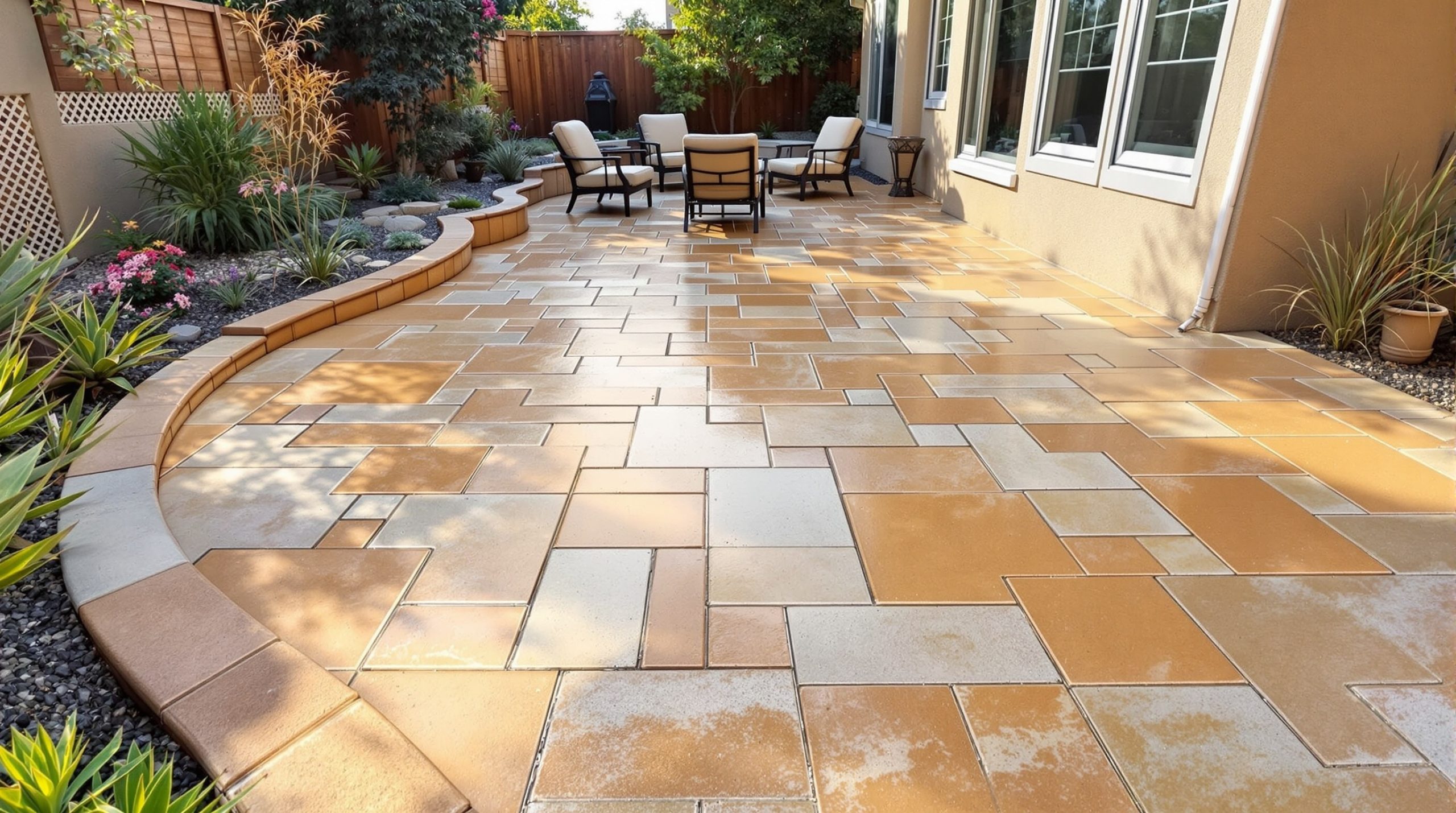
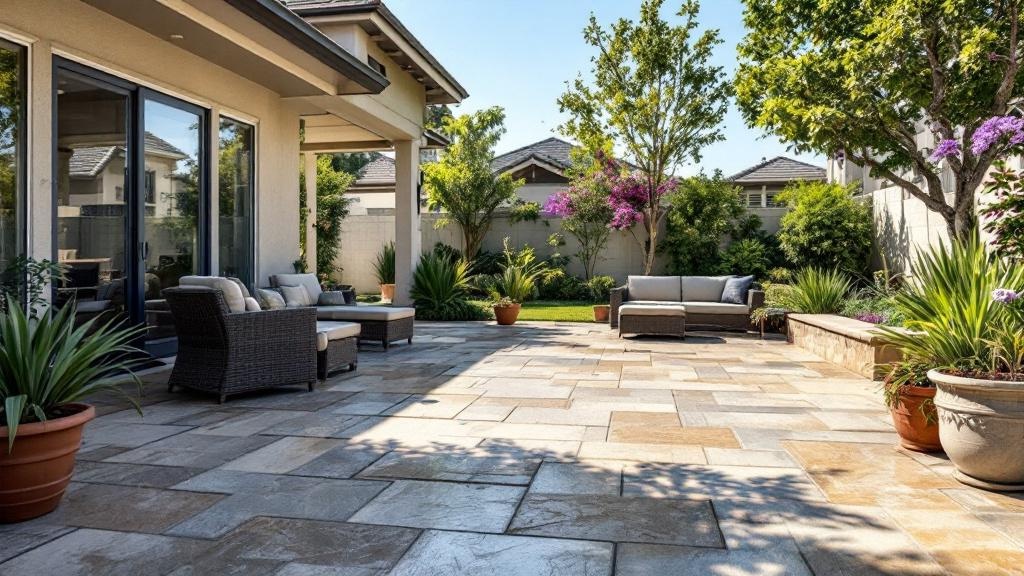
Decorative & Stamped Overlay
A stampable overlay gives you a textured stone, slate, or tile pattern on an existing slab without tearing it out. Typically 3/8 to 1/2 inch thick. Requires a sound base slab, proper surface preparation, and a bonding primer. Color goes in as an integral pigment or surface release. BES confirms slab candidacy before any overlay work is quoted.
Skim Coat & Microtopping
A thin polymer-modified skim coat (1/8 to 1/4 inch) levels minor surface irregularities, covers cosmetic damage, and gives a clean, uniform surface. Used on interior garage floors, patios, and walkways where the existing concrete is sound but looks worn, discolored, or rough. Thinner and less forgiving than a full overlay, surface prep is everything.
Broom Finish Refresh
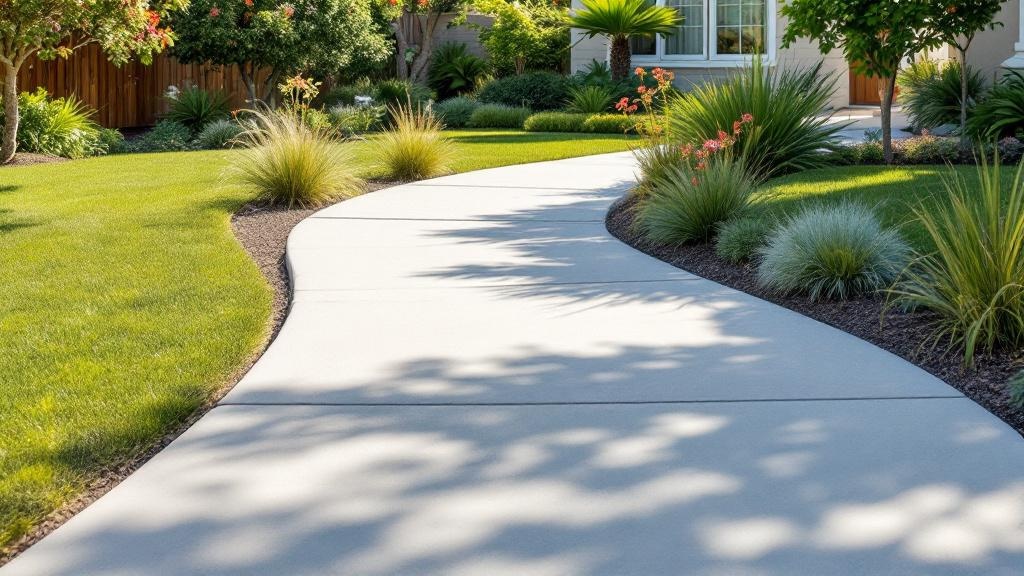
An existing broom-finish driveway or walkway that is worn smooth or discolored can often be resurfaced with a bonded overlay that restores the texture and appearance. Requires the original slab to be sound, properly cleaned, and mechanically profiled for adhesion. Cheaper than full replacement when the underlying concrete is in good condition.
Garage Floor Resurfacing
Garage floors take abuse from oil, moisture, vehicle traffic, and seasonal temperature swings. BES resurfaces sound garage slabs with a polymer-modified overlay or thin epoxy-broadcast system. We grind and profile the surface first, repair any existing cracks or spalling, apply a bonding primer, and finish with a sealer or topcoat for long-term durability.
What Goes Into a BES Concrete Resurfacing Job
Four steps. Surface preparation is where most resurfacing failures start. We do not skip it.
Slab Assessment: Is It a Candidate?
Resurfacing works on concrete that is structurally sound. Before any overlay goes down, we assess the slab for delamination (hollow areas under the surface), active cracking, settlement, and surface contamination. If the slab has failed structurally or has deep spalling that goes to the base, we tell you that resurfacing will not hold and replacement is the better investment. This assessment is part of the free site visit.
Surface Preparation
Surface prep is 80 percent of what determines whether a resurfacing job holds. We grind the existing surface to achieve a concrete surface profile (CSP 3 to 4) that gives the overlay something to mechanically bond to. Cracks get routed and filled with a flexible repair material before the overlay goes down. Oil-contaminated areas are cleaned and treated with a degreaser and verified clean before priming. Skipping any of these steps is why resurfacing fails prematurely.
Primer & Overlay Application
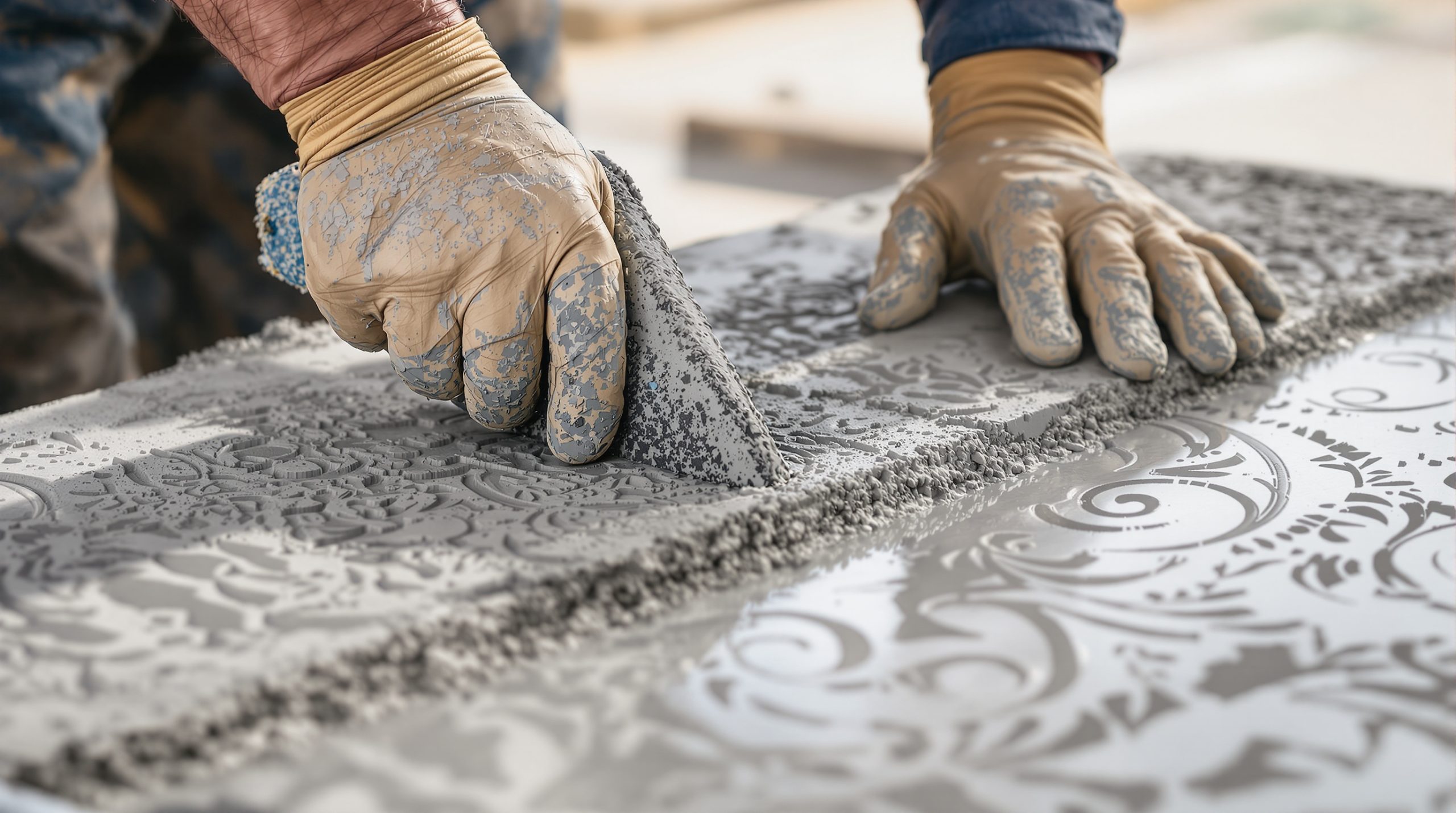
A bonding primer goes down after grinding and cleaning, this is what ties the overlay to the existing concrete. The overlay is mixed and applied at the appropriate thickness: 1/8 to 1/4 inch for a skim coat, 3/8 to 1/2 inch for a standard decorative overlay, up to 3/4 inch for a thick stampable system. Stamping, texturing, or brooming is done while the material is workable. Integral color or surface releases are applied at the correct point in the sequence.
Sealer & Topcoat
A sealer or topcoat is not optional on a resurfaced exterior or garage floor. It protects the overlay from UV fading, water intrusion, oil penetration, and surface abrasion. For exterior work, a penetrating acrylic is standard. For garage floors, a two-component urethane or epoxy topcoat provides harder wear resistance. The sealer also locks in color on decorative finishes. We apply it at the correct cure interval and give you a maintenance schedule before we leave.
Why Surface Prep Is 80 Percent of the Job
Concrete overlays fail for one reason more than any other: the surface was not prepared properly before the material went down. A smooth, sealed, or contaminated surface cannot bond to an overlay. BES grinds every surface to the correct concrete surface profile, verifies contamination is cleared, and never applies a primer or overlay on a substrate that is not ready. Here is what goes into every resurfacing project:
- Cementitious overlayPolymer-modified cement-based overlay material. Different from standard concrete, the polymer content gives it better adhesion at thin sections and flexibility that prevents premature cracking. Applied in thicknesses from 1/8 to 3/4 inch depending on the system.
- Bonding primerApplied to the prepared concrete surface immediately before the overlay. Without a proper bonding primer, even well-prepped surfaces can delaminate from the overlay within a season or two. This step does not get skipped.
- Integral color or surface releaseColor can be added as an integral pigment in the overlay mix, or as a color release agent dusted onto the surface before stamping. Integral color gives a solid, uniform tone through the thickness of the overlay. Surface release gives a two-tone antique effect common on stamped concrete.
- Flexible crack repair materialExisting cracks in the slab are filled with a flexible polyurethane or epoxy sealant before the overlay goes down. Rigid patch materials over active cracks will reflective crack back through the overlay. The material needs to be flexible enough to accommodate minor movement.
- Concrete surface profilingMechanical grinding to CSP 3 or 4 (equivalent to 60-grit or coarser finish) is required for overlay adhesion. Smooth concrete, sealed concrete, or oil-contaminated concrete cannot bond reliably to an overlay without this step.
- Sealer / topcoatPenetrating acrylic sealer for exterior work. Two-component urethane or epoxy topcoat for garage floors. Applied at 28-day cure minimum for the overlay. Reapplication every 3 to 5 years on exterior surfaces is a reasonable maintenance interval.
Honest Answers to Resurfacing Questions
Candidacy, cost, durability, crack handling, and what maintenance looks like. Plain answers, no sales pitch.
Is my concrete a candidate for resurfacing?
Sound concrete is the key requirement. If the slab is structurally intact but looks worn, stained, pitted, or old, resurfacing is a real option. If the slab is cracked through its full depth, has significant settlement, is hollow-sounding when tapped (delamination), or has base failure, resurfacing will not hold and replacement is the more honest recommendation. BES makes this call at the free assessment.
What will concrete resurfacing cost?
A skim coat or thin overlay on a driveway or patio typically runs $3 to $6 per square foot. A decorative stampable overlay runs $6 to $12 per square foot depending on the pattern and color complexity. A garage floor resurfacing with topcoat runs roughly $3 to $7 per square foot. These are estimates, actual pricing depends on the area, prep required, existing crack repair, and finish type. BES gives you a firm written number after the site visit.
How long does resurfaced concrete last?
A properly installed overlay on sound concrete in San Diego County's climate can last 10 to 15 years with proper sealing and maintenance. The main variables are the quality of the surface prep, whether the underlying concrete has any ongoing movement, and how consistently it is sealed. Exterior overlays in direct sun benefit from resealing every 3 to 5 years.
Can resurfacing fix cracks?
Resurfacing can cover and stabilize hairline cosmetic cracks. It does not fix active or structural cracks. Cracks that are still moving will reflective crack back through the overlay, usually within a season. BES fills existing cracks with a flexible repair material before applying the overlay, and is clear with you about whether those cracks are likely to be stable or to reflect.
Will it match my existing concrete color?
Resurfacing changes the surface appearance, so matching aged concrete exactly is not usually the goal or the outcome. An overlay system gives you a new, consistent surface color, which typically looks significantly better than aged concrete that has been patched in spots. If specific color matching is a priority, we discuss integral color options at the quote visit.
Do I need a permit to resurface concrete in Poway?
In most cases, no. Resurfacing that does not change the dimensions, structure, or drainage of existing concrete is typically maintenance work that does not require a permit. The City of Poway building department is the right first call for your specific property. BES confirms the requirement at the assessment if there is any question.
We Resurface What Should Be Resurfaced
The short version: BES does not apply an overlay to a slab that is going to fail anyway. We assess candidacy first, do the prep work correctly, and give you a written quote that reflects the full scope. Same family-run crew since 2016, same written-quote standard on every job.
- Free slab candidacy assessment, resurface or replace verdict included
- Mechanical grinding to proper CSP on every job, no shortcuts
- Written quote with overlay system, thickness, and sealer specified
- Crack repair included in prep, not added as a change order later
- Licensed (CSLB #1026938), insured, and BBB accredited since 2016
- Maintenance guidance provided before we leave the job
Concrete Resurfacing Projects in Poway & San Diego County
Surface restoration and decorative overlay work we have completed for San Diego County homeowners.
Questions Poway Homeowners Ask Before Calling
What is concrete resurfacing and when is it appropriate?
What is the difference between resurfacing and replacement?
How thick is a concrete overlay?
How much does concrete resurfacing cost in Poway?
Will the overlay crack?
How do you prepare concrete for resurfacing?
Can I get a decorative finish with resurfacing?
How do I maintain resurfaced concrete?
Related Concrete Services
Resurfacing pairs naturally with sealing, polishing, and decorative concrete work. When the slab needs repair first, BES handles that too.
Let's Look at Your Concrete
Free on-site assessment, slab candidacy verdict, written quote with overlay system specified. No pressure, no obligation, just an honest look at what your concrete needs.
Licensed & insured (CSLB #1026938) · BBB accredited #1087327 · Serving all of San Diego County from Poway