Concrete Leveling & Mudjacking in Poway & San Diego County
Lift Settled Slabs. Honest About When It Works & When It Does Not.
A sunken driveway section, a heaved patio, a sidewalk trip hazard. If the void beneath the slab is the problem, leveling can fix it without tearing out good concrete. BES assesses your slab honestly and tells you whether leveling makes sense or replacement is the better call.
Get a Free Leveling Assessment
Tell us about your settled slab. We respond same day, usually faster.
Concrete Leveling Services for San Diego County Homes
Mudjacking, polyurethane foam injection, trip hazard elimination, and an honest assessment of whether leveling is actually the right call for your slab. Not every settled slab is a leveling candidate, and BES will tell you which is which.
Mudjacking / Slabjacking
Traditional mudjacking pumps a cement-soil-water slurry through small holes drilled in the slab to fill voids below and hydraulically lift the concrete back to grade. Cost-effective for larger areas and works well on stable, settled soil where erosion created the void.
Polyurethane Foam Injection
A two-part expanding polyurethane foam is injected through smaller drill holes, expands to fill voids, and lifts the slab with less weight added below than traditional mudjacking. Cures faster, typically walkable within an hour. Better choice for areas near plumbing or where added weight is a concern.
Trip Hazard Elimination
A slab edge lifted an inch or two above an adjacent section is a tripping hazard, a liability issue on walkways, sidewalks, and pool decks, and a potential code violation. Leveling can lift the low slab back to flush. Where the height difference is minor, grinding the edge is sometimes the faster fix. We assess which approach makes sense.
Honest Assessment First
Not every settled slab is a leveling candidate. A slab with a shattered or broken structural edge cannot be lifted, the slab itself needs to be replaced. A slab sitting on severely eroded or washed-out soil may need more intervention than foam or slurry can provide. We tell you this upfront rather than take your money on a job that will not hold.
What a BES Concrete Leveling Job Looks Like
Four steps. No crew rushing in to inject foam before anyone looked at what actually caused the slab to settle.
On-Site Assessment & Void Check
We probe around the slab edge and, on larger projects, use a steel rod to check for voiding below. We look at the cause of settlement: tree roots nearby, irrigation line run-off, soil erosion, utility trench backfill that was not compacted. The cause matters for determining whether leveling is a lasting fix or a temporary one.
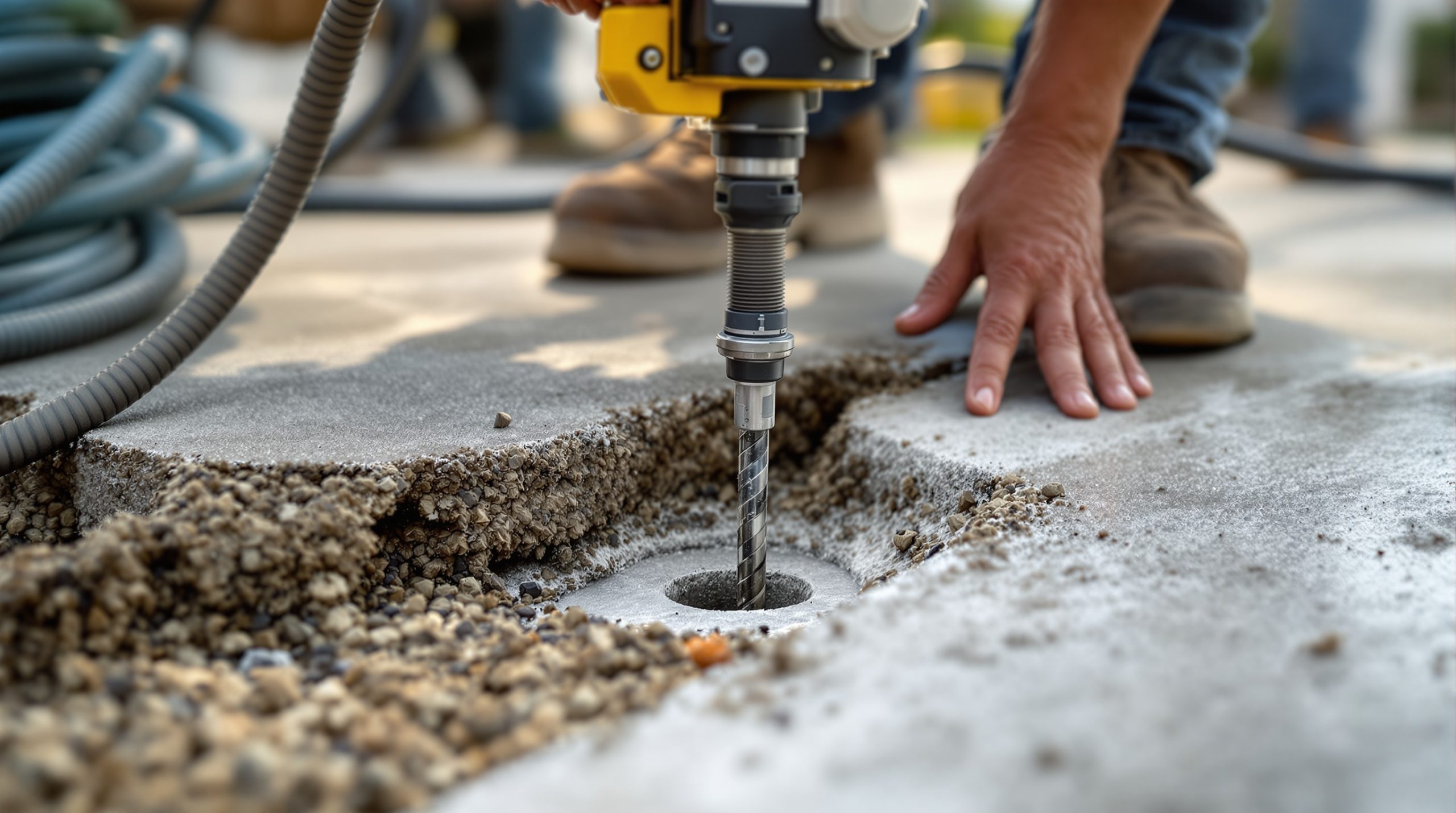
Drill Injection Holes
We drill small holes through the slab at planned injection points. For mudjacking, holes are typically 1.5 to 2 inches in diameter. For polyurethane foam, holes are smaller, around 5/8 inch. Hole placement is mapped to fill voids evenly and lift the slab at the right rate without cracking it during the lift.
Inject Material & Monitor the Lift
Material is pumped in under controlled pressure. For mudjacking, the crew monitors lift progress at each hole and at the slab surface. Foam injection expands rapidly so injection is done in short controlled bursts. The goal is to return the slab to its original elevation, not to over-lift it, which can cause adjacent cracks.
Patch Holes & Clean Up
Injection holes are patched with hydraulic cement or matching concrete mix. The surface around the work area is swept and rinsed. Polyurethane foam is typically walkable within an hour. Mudjacking material needs longer to set before heavy vehicle traffic, we give you the specific timeline for your project.
Mudjacking vs. Foam, and When Neither Works
Concrete leveling is a legitimate, cost-effective repair when the slab is structurally sound and a void beneath it caused the settlement. It is not a universal solution. A slab that has cracked through, broken at the edge, or settled because of an active root or ongoing drainage problem cannot be fixed by lifting it back up. Here is how we approach material selection and when we recommend replacement instead:
- Mudjacking slurryA mix of portland cement, soil, and water pumped under pressure to fill voids and hydraulically lift the slab. More material weight below the slab than foam, but lower cost per square foot on larger projects.
- Polyurethane foamTwo-part expanding foam injected through small holes. Cures quickly, adds minimal weight below the slab, and is waterproof unlike the cement slurry. Better choice when added load is a concern or where proximity to plumbing requires careful void management.
- Injection pressureBoth methods require controlled injection pressure monitored during the lift. Over-pressuring lifts one part of the slab faster than another and can crack it. This is why slow, measured injection with pauses to check slab elevation matters.
- Drill holesMudjacking holes are patched with hydraulic cement. Polyurethane holes are patched with foam-compatible patch material. On decorative or stamped surfaces, patch visibility is a real consideration we flag at the assessment.
- When leveling does NOT workA slab with a fractured or broken edge cannot be lifted, the structural integrity is gone and lifting will just crack it further. A slab that has settled due to active tree root intrusion may re-settle after leveling if the root is not addressed. We tell you this before taking any money.
Straight Answers on Concrete Leveling
Cost vs. replacement, what makes a good candidate, causes of settlement, and what we will tell you if leveling is not the right call.
What does concrete leveling cost vs. replacement?
Mudjacking typically runs $3 to $8 per square foot depending on access, void depth, and number of injection points. Polyurethane foam injection typically runs $5 to $12 per square foot. Full concrete replacement runs $8 to $15 per square foot for a plain slab. When leveling is a viable option, it is almost always less expensive than full replacement. The question is whether the slab is actually a leveling candidate, BES assesses that at the free site visit.
Is my slab a good candidate for leveling?
The classic candidate is a slab that has settled because a void opened beneath it, erosion from irrigation or rainwater runoff washing away the sub-base, a utility trench that was backfilled but not compacted, tree roots that pushed soil away. If the slab is structurally sound (no through-cracks, no shattered edges, no major delamination), leveling it back up is usually a legitimate option. A slab that has cracked through multiple panels, heaved due to active tree root pressure, or structurally broken at the edge is a replacement job.
What causes concrete slabs to sink?
The most common causes in San Diego County: irrigation systems running against slab edges and slowly eroding the sub-base over years, tree roots displacing or removing soil from beneath the slab, utility trenches that were backfilled with loose material that compressed over time, and drainage patterns that channel water under slab sections. The underlying cause matters because leveling a slab without fixing the cause means it may settle again.
How long does concrete leveling last?
It depends on whether the underlying cause of settlement is still active. If a void formed from an old one-time event, a utility trench that settled, a water line that was repaired, and that void is now filled, leveling can last as long as the original slab. If the cause is ongoing, irrigation running against the slab, an active tree root, the slab may settle again. We flag this at the assessment.
Do I need a permit for concrete leveling?
Typically no. Mudjacking and polyurethane foam injection are repair operations that do not require a building permit in most San Diego County jurisdictions. This is one of the practical advantages of leveling over full replacement when it is applicable. We confirm the permit situation for your specific address if there is any question.
How disruptive is the work?
The crew is on-site for a few hours for most residential leveling jobs. For polyurethane foam, the area is typically walkable within an hour of completion. For mudjacking, foot traffic is possible within a few hours and vehicle traffic within 24 hours. There is no heavy equipment like a concrete truck or breaker on site. We sweep and rinse the work area before we leave.
We Tell You When Leveling Will Not Hold
BES has been working concrete across San Diego County since 2016. We know what settled slabs look like and when leveling makes sense. We also know when it does not, and we say so rather than take your money on a repair that will fail.
- Free on-site assessment before any quote is written
- Honest about whether leveling is viable or replacement is needed
- Both mudjacking and polyurethane foam injection available
- The cause of settlement flagged so you can address it if it is ongoing
- Licensed (CSLB #1026938), insured, and BBB accredited since 2016
- Written quote, firm price, no add-ons once work starts
Concrete Repair & Leveling in Poway & San Diego County
Settled and repaired concrete from across inland North County.
Questions Poway Homeowners Ask Before Calling
How much does concrete leveling cost in Poway?
What is the difference between mudjacking and polyurethane foam injection?
What causes concrete slabs to sink in San Diego?
How do I know if my concrete can be leveled or needs replacement?
Do I need a permit for concrete leveling or mudjacking?
How long does concrete leveling last?
Can you level a pool deck or driveway?
Related Concrete Services
Leveling often pairs with concrete repair, or is part of a broader project to address cracked driveways, sidewalk hazards, or foundation issues. Same crew, same written-quote standard.
Let's Look at Your Settled Slab
Free on-site assessment, written quote if leveling is viable, honest answer if it is not. No pressure, no obligation, just a straight look at what your concrete needs.
Licensed & insured (CSLB #1026938) · BBB accredited #1087327 · Serving all of San Diego County from Poway