![Exposed aggregate concrete pool deck in Poway San Diego County, BES Concrete [VERIFY image]](https://powayconcrete.com/wp-content/uploads/2026/07/bes-exposed-aggregate-concrete-texture-scaled.jpg)
Exposed Aggregate Concrete in Poway & San Diego County
Natural Texture, Real Traction, Built to Last
Exposed aggregate reveals the stone within the concrete mix rather than burying it under a flat surface. The result is a textured, slip-resistant finish that holds its appearance for decades when it is sealed correctly. BES has been installing exposed aggregate across San Diego County since 2016.
Get a Free Exposed Aggregate Quote
Tell us about your project and what aggregate look you have in mind. We respond same day.
Exposed Aggregate Concrete for San Diego County Homes
Pool decks, driveways, patios, and walkways, BES installs exposed aggregate wherever natural texture and wet-surface traction matter. Same structural base, better finish. One crew, one written quote, one price.
Pool Decks
The most common application for exposed aggregate in San Diego County. The textured stone surface provides genuine traction when wet, compared to smooth broom-finish concrete that can become slick around water. Aggregate size and color are selected at the quote visit to complement your pool finish and existing landscaping.
Driveways & Entries
Exposed aggregate driveways hold their appearance longer than plain broom-finish because surface wear reveals more of the same aggregate rather than exposing an increasingly gray paste layer. Many homeowners in Poway and Rancho Bernardo choose it for a front entry or driveway upgrade ahead of selling the property.
Patios & Outdoor Living
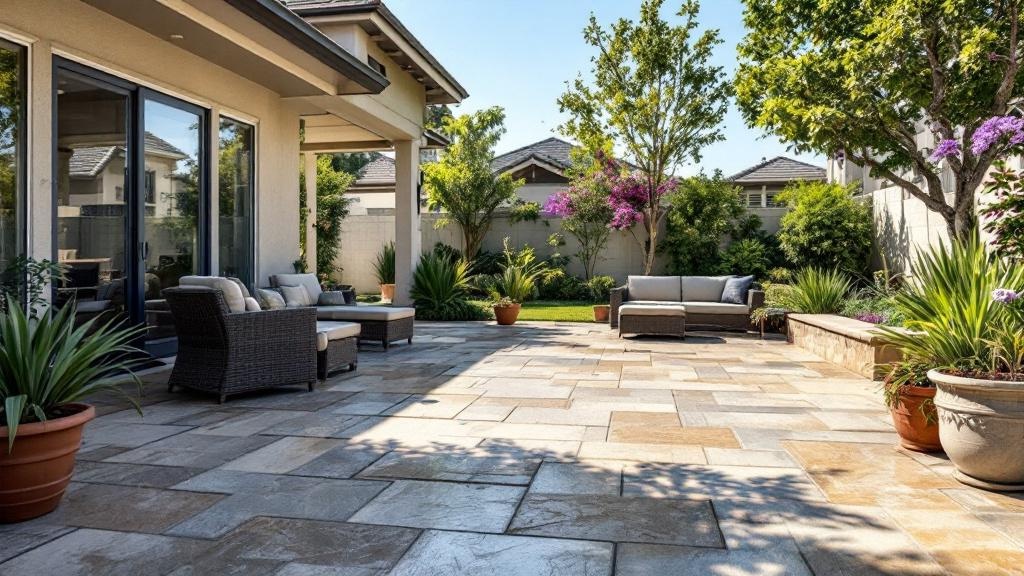
Exposed aggregate patios pair well with the natural stone and xeriscape landscaping common in inland North County. The surface is comfortable barefoot compared to stamped concrete (which can transfer heat more), and a medium aggregate size gives the finished surface a handsome, natural look that does not try to imitate another material.
Walkways & Pathways
A textured walkway surface is a practical safety choice, particularly on sloped paths or in areas that stay moist from irrigation. Exposed aggregate walkways also tie the look of a driveway to a pool deck or patio when they are poured as a connected project using the same aggregate blend.
The Exposed Aggregate Process, Step by Step
Timing is what separates a clean exposed aggregate finish from a patchy one. The wash window is typically a 4 to 24-hour range, BES plans around it and returns on schedule regardless of when in that window it falls.
Aggregate Selection & Site Prep
We discuss aggregate size and color options at the quote visit, pea gravel for a fine, uniform texture; medium stone (half to three-quarter inch) for a bolder, more architectural look; or a custom blend. Base prep and forming follow the same structural standards as any BES concrete project: proper excavation depth, compacted class II road base, and rebar reinforcement.
Pour & Surface Retarder Application
After the slab is poured, screeded, and bull-floated, a chemical surface retarder is applied to the top surface before bleed water fully evaporates. Timing matters here: applied too late and the paste has already set; too early and it penetrates too deeply. The retarder delays the set of the surface cement paste while the underlying concrete cures normally.
Wash & Exposure
Typically 4 to 24 hours after the pour, the window varies with temperature, humidity, and the specific retarder formulation, we return to wash off the retarded surface paste with water and a stiff brush. This reveals the aggregate below. The exposure depth determines how prominent the stone appears. Getting the timing right is the skill; too early and the aggregate is not secure, too late and the paste will not wash off cleanly.
Sealing at 28 Days
After the concrete reaches full cure at 28 days, we apply a penetrating acrylic sealer. Sealing is not optional on exposed aggregate, it bonds the surface aggregate and prevents loosening over time, protects the stone color from UV fading, and makes the surface easier to clean. Re-seal every 2 to 3 years for best results. Sealing is quoted and scheduled at the same time as the pour.
![Decorative concrete surface texture detail in San Diego County, BES Concrete [VERIFY image]](https://powayconcrete.com/wp-content/uploads/2026/07/bes-decorative-stamped-concrete-detail-scaled.jpg)
What Goes Into an Exposed Aggregate Finish That Lasts
Exposed aggregate is structurally the same as any concrete slab, proper base, rebar, correct mix. The finish layer is the variable. Getting a clean, consistent exposure requires the right retarder application, the right timing on the wash, and sealing at the 28-day mark. Skip the sealer and individual stones start loosening within a few years. Here is what BES specifies:
- Aggregate optionsPea gravel (3/8 to 1/2 inch) gives a tight, uniform texture. Medium decorative stone (1/2 to 3/4 inch) gives more visual depth and a bolder appearance. Larger architectural stone (3/4 inch and up) is available for statement driveways or pool decks. Aggregate color varies from river-washed neutrals to warm tones, selection is done with samples at the quote visit.
- Surface retarderApplied immediately after bull-floating while bleed water is still visible on the surface. The retarder chemically delays the set of the top 1/8 to 3/16 inch of cement paste without affecting the structural concrete below. Formulation strength determines exposure depth.
- Exposure timingWash and exposure typically occurs 4 to 24 hours after the pour, depending on ambient temperature and humidity, mix water-to-cement ratio, and retarder type. Hotter, drier conditions (common in Poway’s inland summers) shorten the window. Getting the timing right is the skill that separates a clean exposure from a patchy one.
- Concrete mix3,000 to 4,000 PSI structural concrete with aggregate uniformly distributed throughout the mix. The base slab is the same structural spec as standard flatwork, exposed aggregate is a surface treatment, not a structural change.
- SealerPenetrating acrylic sealer applied at 28-day cure. Sealing exposed aggregate prevents individual stones from loosening at the surface as the bond ages. It also protects color from UV fading and makes the surface cleanable. Re-seal every 2 to 3 years, or when water no longer beads on the surface.
- Reinforcement#3 or #4 rebar on standard grid centers, consistent with the application, driveway, pool deck, or patio specs. The aggregate finish does not change the structural requirements; we build the slab to the load it will carry.
Straight Answers to the Questions We Hear Most
Cost, traction, maintenance, longevity, and how this compares to other decorative concrete options. No sales spin.
What does exposed aggregate concrete cost?
Exposed aggregate finishes typically run $10 to $18 per square foot in the Poway and San Diego County area, depending on aggregate selection, slab size, any demolition required, and whether sealing is included. A pool deck of 400 to 600 square feet usually falls in the $4,000 to $10,000 range. These are estimates, BES gives you a firm written price after the free site visit.
How is this different from stamped concrete?
Stamped concrete uses pattern mats pressed into the surface to mimic stone, brick, or wood. Exposed aggregate reveals the actual stone within the concrete mix. Neither is inherently better, stamped gives you pattern and color control, exposed aggregate gives you natural texture and a surface that does not show stamped-pattern wear at the edges over time. Both are options BES can walk you through on the same quote.
Does exposed aggregate get slippery when wet?
The textured stone surface provides significantly better traction when wet than a trowel-finish or lightly broomed concrete surface. This is why it is the most common choice for pool decks in San Diego County. It is not completely slip-proof, no outdoor surface is, but it is one of the better choices available in concrete for wet-area traction.
How long does exposed aggregate concrete last?
With proper sealing at installation and re-sealing every 2 to 3 years, exposed aggregate concrete can look good for 20 to 30 years. The main longevity issue is aggregate loosening from an unsealed or poorly sealed surface, individual stones can pop out over time if the surface bond is not maintained. A well-sealed slab in San Diego’s relatively mild climate (no freeze-thaw cycles) ages well.
Can I add integral color to exposed aggregate?
Yes. Integral color goes into the concrete mix before the pour and tints the cement paste between the aggregate stones. The combination of colored paste and naturally colored stone creates a warmer or more distinctive look than natural gray. We discuss color options at the site visit.
Do I need to reseal it?
Yes. Resealing every 2 to 3 years is the maintenance requirement for exposed aggregate. A simple test: pour a small amount of water on the surface, if it beads, the sealer is still working. If it absorbs into the concrete, it is time to reseal. Neglecting the sealer is the most common reason exposed aggregate surfaces develop loose or popping stones.
![Decorative concrete patio at a San Diego County home by BES Concrete [VERIFY image]](https://powayconcrete.com/wp-content/uploads/2026/07/bes-stamped-concrete-patio-san-diego-county-scaled.jpg)
A Poway Crew That Gets the Timing Right
Exposed aggregate is one of the more process-sensitive concrete finishes. The retarder application window, the wash timing, and the sealing schedule all need to happen on schedule. BES has been installing exposed aggregate across San Diego County since 2016. Raymond manages the schedule directly, there is no dispatcher telling a subcontracted crew when to show up for the wash.
- Aggregate options reviewed and confirmed at the site visit with samples
- Written quote is the price, aggregate selection, sealing included, no surprises
- Crew returns on schedule for the wash regardless of the hour it falls
- Licensed (CSLB #1026938), insured, and BBB accredited since 2016
- 28-day sealing appointment scheduled at the time of the pour, not as an afterthought
- We walk the finished surface with you and confirm the exposure quality before leaving
Decorative Concrete Projects in Poway & San Diego County
Decorative and textured concrete surfaces for homeowners across inland North County.
Questions Poway Homeowners Ask Before Calling
What is exposed aggregate concrete?
How much does exposed aggregate concrete cost in Poway?
How long does exposed aggregate concrete last?
Can exposed aggregate concrete be used for a driveway?
Does exposed aggregate concrete get slippery when wet?
How is exposed aggregate different from stamped concrete?
How do I maintain exposed aggregate concrete?
How long does the exposed aggregate process take from pour to finished surface?
Related Concrete Services
Exposed aggregate projects often pair with pool deck work, patio expansions, or decorative concrete on the same property. Same crew, same written-quote standard.
Let's Talk About Your Exposed Aggregate Project
Free on-site quote. We bring aggregate samples so you can see the finish options in your actual light before the quote is written. No pressure, no obligation.
Licensed & insured (CSLB #1026938) · BBB accredited #1087327 · Serving all of San Diego County from Poway