New Concrete Footings & Foundations in Poway & San Diego County
Built to Bear Load in Clay Soil Before the First Frame Goes Up
New footings for sheds, ADUs, patio covers, and room additions. Proper depth and rebar for San Diego County's expansive soil. Written quote, firm price. You call Raymond, not a dispatcher.
Get a Free Footing Quote
Tell us what you are building and we will come take a look. Same-day response, usually faster.
New Concrete Footing Services for San Diego County Homes
Sheds, ADUs, patio covers, additions, and retaining walls all need a properly poured concrete footing before anything can be built. BES handles the excavation, rebar, pour, and inspection coordination so framing can start on schedule.
Shed & Accessory Structure Footings
Pier footings or continuous perimeter footings for new sheds, detached workshops, garden studios, and storage structures. Sized for the structure and poured to stable bearing depth, with permit coordination included in scope.
ADU & Room Addition Foundations
Full perimeter footing and stem wall or slab-on-grade for a permitted detached ADU, garage conversion, or room addition. We work from your approved plans and hand off cleanly to your framing contractor.
Patio Cover & Pergola Post Footings
Isolated column footings for patio cover posts, freestanding pergolas, and attached shade structures. Engineered to resist lateral and uplift loads, not just downward weight. We size them to your post layout and permit requirements.
Retaining Wall Footings
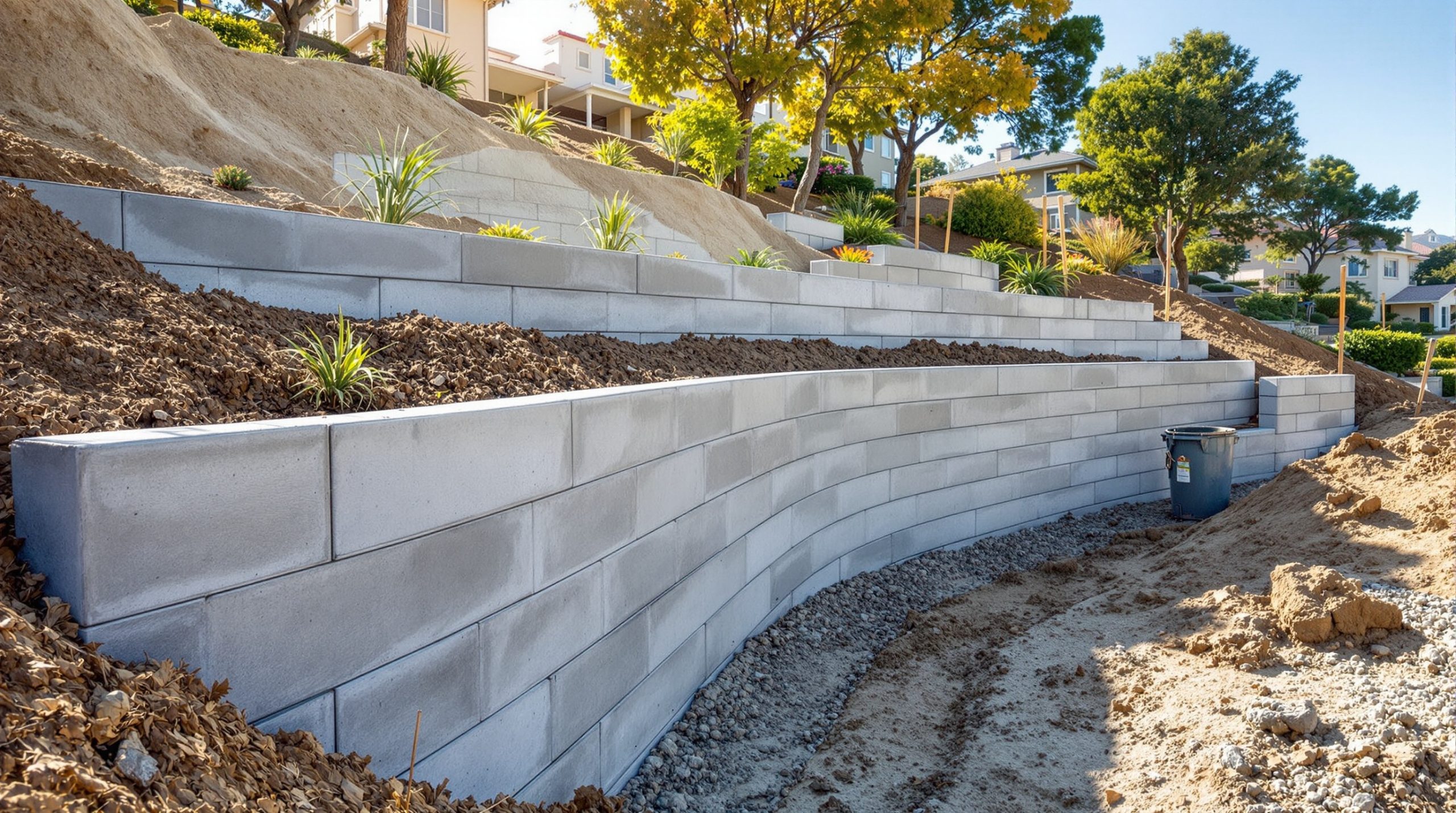
Spread footing for a new poured-concrete or concrete-block retaining wall. Footing dimensions depend on wall height and soil conditions. We handle the concrete footing scope; the wall construction ties in directly on top.
From Bare Ground to Inspection Sign-Off
Four steps, no steps skipped. The same process whether it is a small shed footing or a full ADU foundation.
Free On-Site Assessment & Permit Review
We come to the site, look at what you are building and what is going on top of the footing, and check soil conditions at grade. We confirm whether your project is in the City of Poway or unincorporated San Diego County, that determines which building department issues your permit. You leave the site visit knowing the scope, the permit path, and the price.
Excavation to Stable Bearing Depth
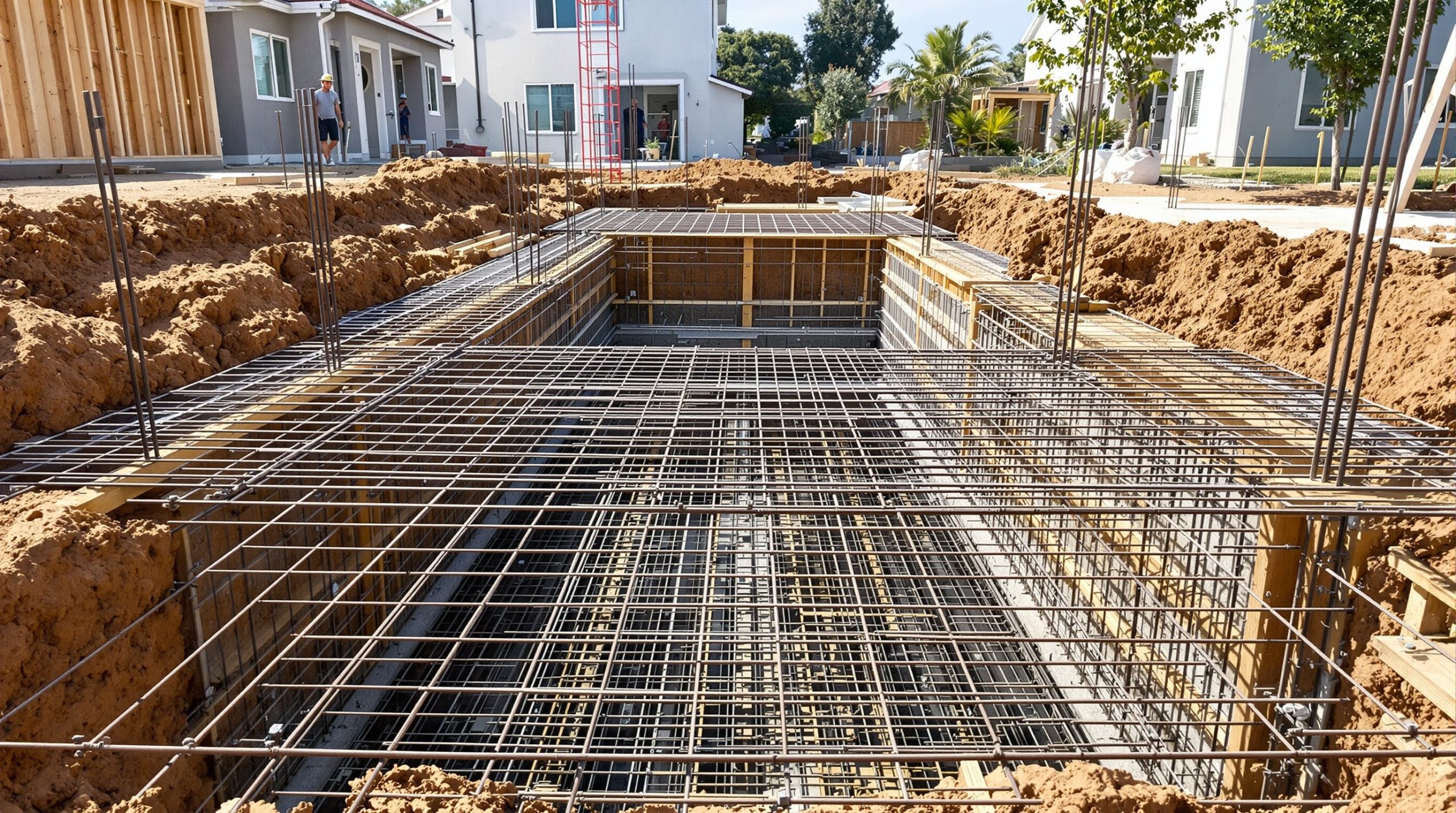
We dig to the depth and width the footing design requires. San Diego County has no meaningful frost line, but inland North County sits on expansive clay that moves with moisture. We excavate to stable bearing soil, verify conditions at the bottom, and do not pour until we are confident in what the footing is resting on.
Form Setting, Rebar & Pour
Forms go in at the correct dimensions. Anchor bolts, post-base hardware, or hold-downs are set to your structural plan layout before the pour. Rebar is placed per code or engineer's specification, typically #4 bar for residential work. Then we pour 2,500 to 3,000 PSI concrete and finish the top surface to receive whatever anchors to it.
Cure, Inspection & Framing Handoff
Footings reach working strength within 7 days under normal San Diego County temperatures. We schedule the building department inspection so framing can start as soon as the inspector signs off. We coordinate directly with your framing contractor or let you know the exact inspection timeline if you are owner-building.
What Goes Into a Footing That Actually Holds
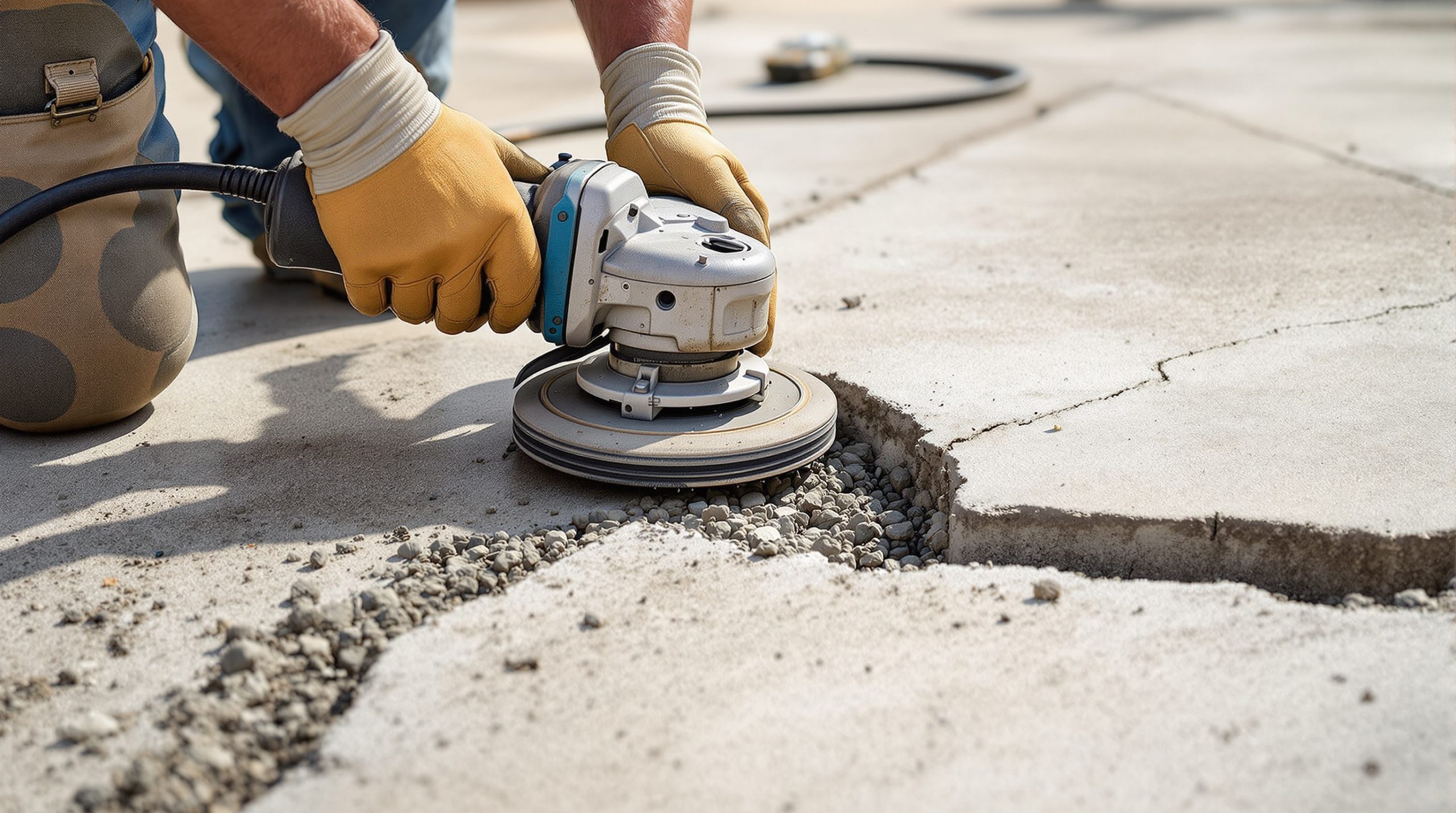
San Diego County's inland clay soil expands with moisture and contracts when it dries. A footing poured shallow in expanding clay can heave and crack whatever is sitting on top of it within a few seasons. Here is how BES specifies every residential footing job:
- Concrete mix2,500 to 3,000 PSI for standard residential footings. Engineered designs or engineered ADU foundations may specify higher strength; we pour to the plans.
- Rebar#4 bar minimum for most residential footings, lapped at corners to continuous-tie standard. Spacing and embedment depth per structural plans or residential prescriptive code.
- Footing depthTypically 12 to 24 inches below finish grade for residential work. San Diego County has no frost line to worry about, but expansive clay means we dig to stable bearing material, not just to a preset number.
- Footing widthScaled to the load. Shed pier footings may be 12 inches square. ADU perimeter footings are typically 16 to 24 inches wide. Patio cover post footings are sized for uplift resistance, not just downward load.
- Anchor hardwarePost-base brackets, anchor bolts, J-bolts, and hold-downs embedded during the pour to your plan's layout and specification. Placement is set and checked before we pour.
- Base at bearing depthLoose, disturbed, or expansive material at the bottom of the excavation gets removed or compacted before forming. We do not pour over soft soil regardless of what the plan says the depth should be.
Honest Answers to the Questions We Hear Most
Cost, permits, depth requirements, and how new footings differ from foundation repair. Plain answers before you pick up the phone.
What does new footing work cost?
Simple shed footings, four to six piers or a short perimeter, typically run $800 to $2,500 depending on depth, size, and soil conditions. ADU and addition foundations are a larger scope and are priced individually after we see your plans and site. The only number that matters is the written quote after a free on-site visit, which is what BES provides.
Do I need a permit?
Almost always yes, if any structure goes on top. Sheds over approximately 120 square feet, ADUs, patio covers attached to the house, room additions, and retaining walls over a certain height all require permits. Whether your address is in the City of Poway or unincorporated San Diego County determines which building department is involved. We confirm that at the site visit and handle the coordination.
How is this different from Foundation Repair?
Foundation Repair is for an existing structure whose foundation has cracked, settled, or shifted. This page is for new-construction footings: a structure that does not exist yet needs a footing poured before it can be built. If your existing home, garage, or retaining wall has a foundation problem, see our Foundation Repair page. Two different problems and two different scopes of work.
How deep do footings need to be in San Diego County?
San Diego County has minimal frost risk, so frost depth is not the main driver the way it is in colder climates. The real factor in inland Poway and North County is expansive clay soil that swells and contracts with moisture changes. Footings need to reach stable bearing material, which often means 18 inches or more in clay-heavy sites. The right number depends on your soil and what the footing is supporting.
How long before framing can start?
Seven days is the minimum strength threshold for most residential framing loads. The building inspector has to sign off on the footing inspection first, which typically happens a few days after scheduling. We handle inspection coordination so your framing contractor can start as soon as inspection is cleared, not a day later than necessary.
Can BES handle the concrete scope for my permitted ADU?
Yes. BES does the footing excavation, form setting, rebar, anchor hardware, and pour for ADU foundations in Poway and San Diego County. We work from your approved plans and coordinate directly with your general contractor or framing crew for a clean handoff. If you are owner-building, we can walk you through what the inspection process looks like.
A Poway Crew That Gets the Foundation Right the First Time
BES Concrete has been doing footing and structural concrete work across San Diego County since 2016. Raymond and the same crew that quotes your project are the ones who excavate, set rebar, and pour it. No dispatchers, no unfamiliar subs.
- You talk to who does the work, not a call center or middleman
- Written quote after site visit, that price is the price
- Excavation to actual stable bearing soil, not just to a number on paper
- Permit coordination and inspection scheduling handled for you
- Licensed (CSLB #1026938), insured, and BBB accredited since 2016
- Full cleanup and job-site walkthrough before we pack up
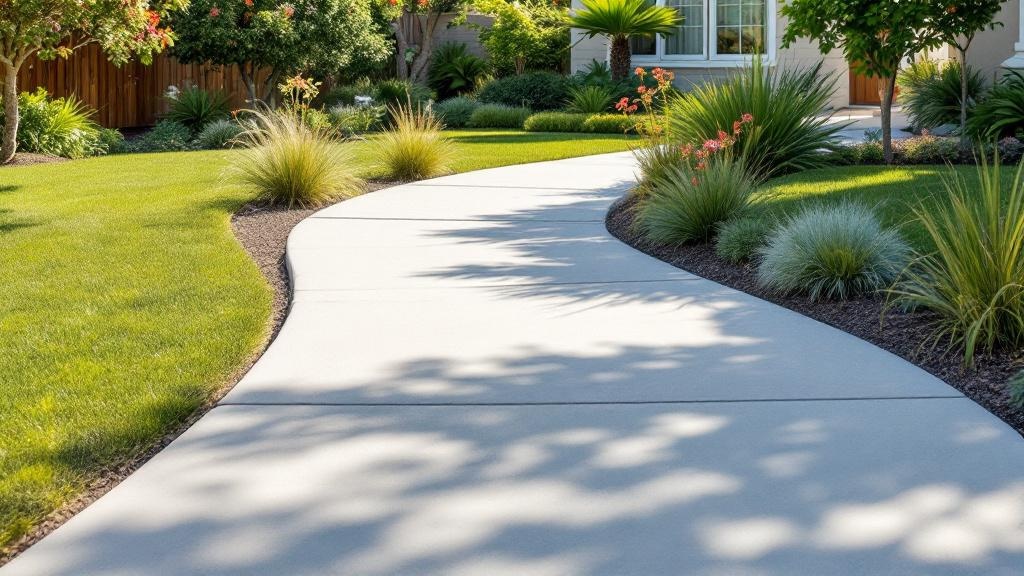
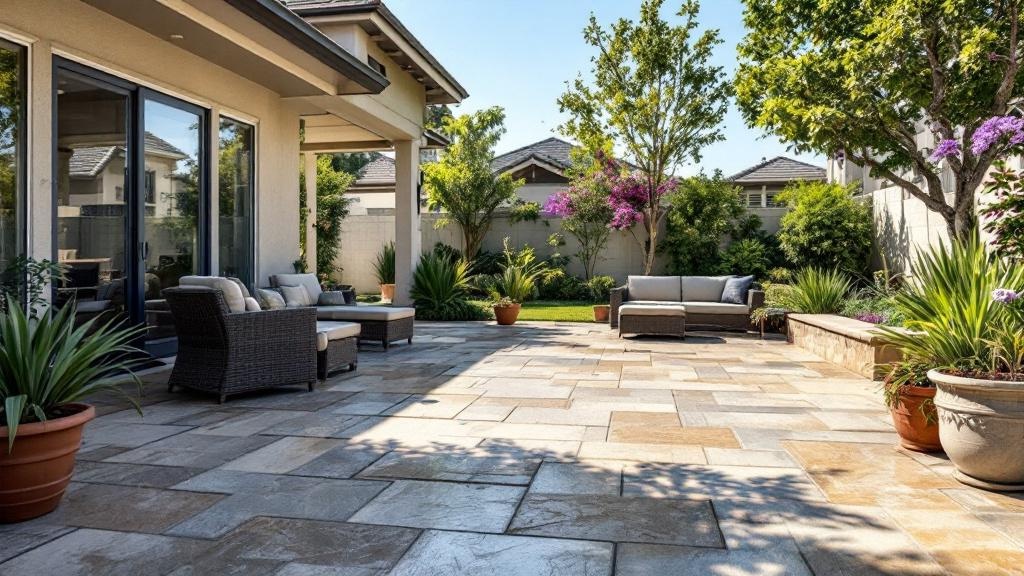
Structural Concrete Projects in Poway & San Diego County
Concrete work we have poured for homeowners across inland North County.
Questions Poway Homeowners Ask Before Starting a New Build
What is a concrete footing and why does it matter?
How much do new concrete footings cost in Poway?
Do I need a permit to pour concrete footings in San Diego County?
How deep should footings be in Poway and inland San Diego County?
What is the difference between a footing and a foundation?
What is the difference between new footing work and foundation repair?
How long does concrete need to cure before framing can start?
Can BES pour the foundation for a detached ADU?
Related Concrete Services
New footing work often comes with slab-on-grade, retaining walls, or other concrete scope on the same project. Same crew, same written-quote standard.
Let's Look at Your Footing Project
Free on-site visit, written quote before we start, firm price when we finish. No pressure, no obligation, just an honest look at what your project needs from the ground up.
Licensed & insured (CSLB #1026938) · BBB accredited #1087327 · Serving all of San Diego County from Poway